Gir Cattle Breed Guide: Physical Traits, Origin, Heat Resilience & Dairy Management
Introduction to the Gir Cattle Breed
The Gir cow is one of the premier indigenous (zebu) dairy cattle breeds of the Indian subcontinent. Renowned for its distinctive appearance, calm temperament, and remarkable climate resilience, the Gir breed has played a cornerstone role in sustainable Indian dairy farming for generations. Native to western India, Gir genetics have also been exported globally, particularly to South America, where they formed the foundation of the world-famous Guzerá and Gyr dairy lines.
For Indian dairy farmers and livestock owners seeking climate-adapted, hardy dairy animals, understanding the breed traits, nutritional requirements, and housing management of Gir cattle is essential for maximizing productivity and herd health.
Origin and Native Breeding Tract
The Gir breed takes its name from the Gir forest region and surrounding hills in the Kathiawar peninsula of Gujarat. The traditional home tract encompasses:
- Primary districts: Junagadh, Gir Somnath, Amreli, Bhavnagar, and Rajkot in Gujarat.
- Breeder communities: Historically bred and conserved by nomadic pastoralist communities, notably the Maldharis, who selected animals for endurance, foraging capability, and sustained milk production under varying forage availability.
Distinguishing Physical Characteristics
Gir cattle possess unique morphological traits that make them unmistakable among Indian zebu breeds:
| Feature | Key Physical Identification Traits |
|---|---|
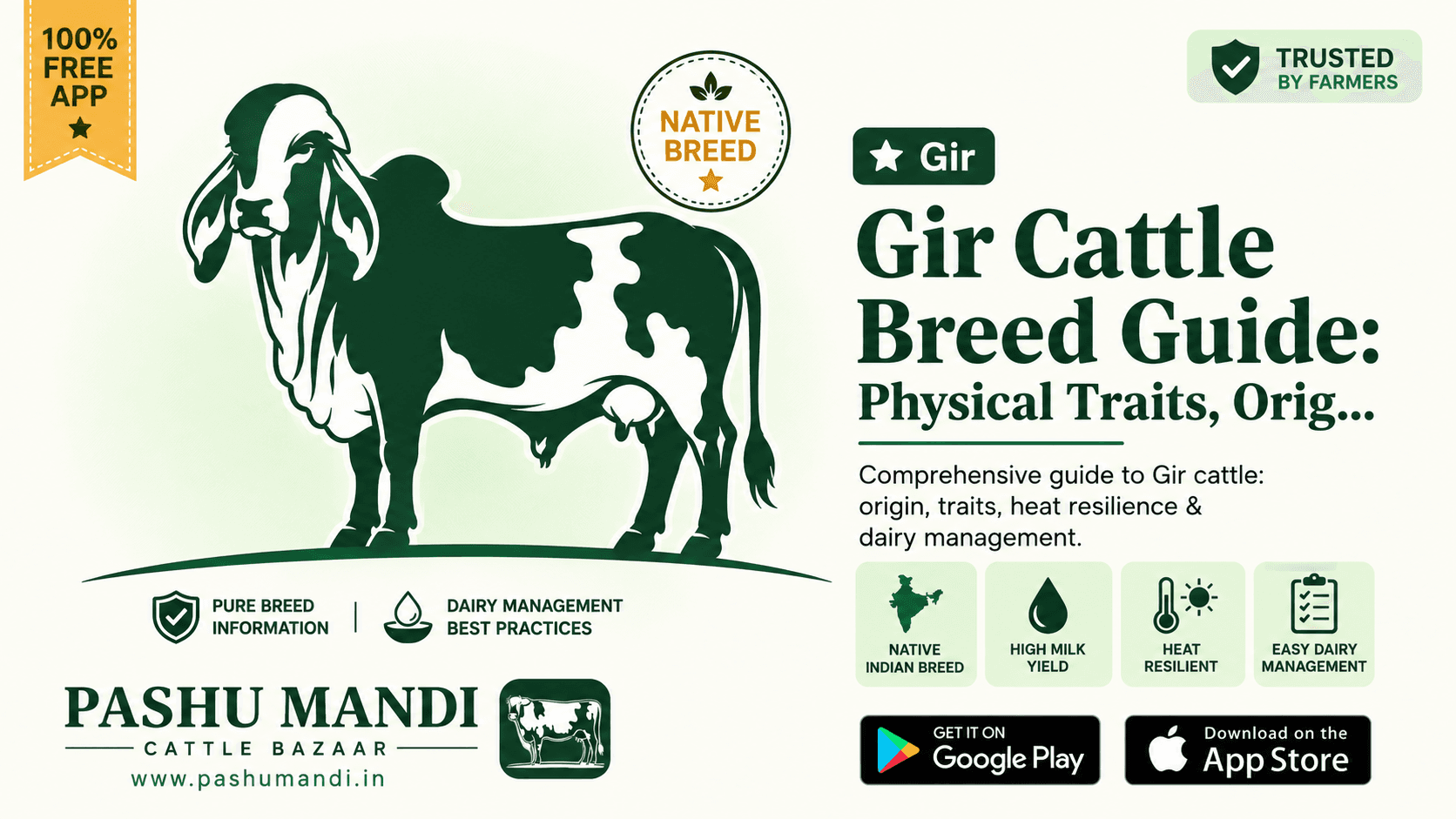
| Head & Forehead | Broad, prominently convex (domed) forehead that overhangs the eyes like a bony shield, protecting the eyes from direct sun glare. |
| Ears | Extremely long, pendulous, and drooping. They hang like a curled leaf with the notch near the tip. |
| Horns | Emerge backward and downward from the base of the crown, then curve upward and inward. |
| Coat & Color | Ranges from solid dark red and reddish-brown to speckled white with red or brown patches (often called Chitra). |
| Body Frame & Dewlap | Medium-to-large frame, well-developed hump positioned over the shoulders, deep chest, and a large, loose dewlap and pendulous umbilical flap. |
| Tail & Hooves | Long tail ending in a black switch (brush) that almost sweeps the ground; dark, hard hooves providing sure-footedness. |
Climate Resilience and Adaptability
One of the strongest advantages of Gir cattle is their superior adaptability to harsh tropical conditions:
- Heat Tolerance: The loose, vascularized skin and abundant sweat glands enable effective thermoregulation during extreme summer temperatures, reducing drop-offs in feed intake and production.
- Parasite & Tick Resistance: The tight subcutaneous muscle layer allows skin twitching that deters biting insects, while natural immunity provides greater resistance to tick-borne tropical hemoprotozoan diseases.
- Foraging Efficiency: Gir cattle can effectively digest coarse crop residues and dry roughages when green fodder is seasonally scarce.
Dairy Management and Feeding Practices
While Gir cattle are resilient, achieving consistent dairy performance requires systematic herd management and scientifically balanced nutrition:
1. Nutritional Balance
- Green Fodder: Provide 20 to 30 kg of high-quality seasonal green fodder daily (e.g., maize, sorghum, oats, berseem, or hybrid Napier) to support rumen digestion and provide natural carotene and vitamins.
- Dry Roughage: Offer 4 to 6 kg of clean wheat straw, paddy straw, or sorghum stover daily to maintain proper rumen fill and fiber balance.
- Concentrate Ration: Feed a balanced cattle feed mix (grains, oil cakes, brans, and pulses) calibrated to the cow's body weight, stage of lactation, and daily milk yield.
- Mineral Mixture & Salt: Supplement 40 to 60 grams of area-specific chelating mineral mixture and regular salt daily to support reproductive cycles, hoof strength, and immune vigor.
- Clean Water: Ensure ad-libitum access to clean, fresh drinking water (60 to 80+ liters per animal daily, especially during summer).
2. Housing and Shelter
Housing should prioritize natural airflow and temperature moderation:
- Provide well-ventilated sheds with a high roofline (preferably thatch, insulated asbestos, or coated sheets) to minimize radiant heat.
- Ensure non-slippery, grooved concrete flooring or packed earthen standing areas with a gentle 1:40 slope toward a drainage channel.
- Incorporate shade trees, misters, or ceiling fans in loose housing setups during peak heat periods.
3. Preventive Health & Veterinary Care
Work with a licensed local veterinarian to maintain standard vaccination protocols against Foot and Mouth Disease (FMD), Hemorrhagic Septicemia (HS), and Black Quarter (BQ). Implement regular deworming schedules before and after monsoon seasons.
Selecting and Buying Gir Cattle
When purchasing Gir cattle at livestock mandis or online on Pashu Mandi, buyers should examine:
- True-to-type head structure (convex forehead and pendulous ears).
- Udder symmetry, teat placement, and absence of hard fibrotic tissue or past mastitis signs.
- Calving history, lactation stage, and temperament during handling and milking.
- Clear eyes, active alert behavior, and healthy hooves.
हिन्दी सारांश: गिर गाय नस्ल परिचय और डेयरी प्रबंधन
गिर गाय भारत की प्रमुख देशी (ज़ेबू) दुधारू गोवंश नस्लों में से एक है, जिसका मूल स्थान गुजरात का सौराष्ट्र क्षेत्र (गिर वन, जूनागढ़, भावनगर, अमरेली, राजकोट) है।
मुख्य पहचान और शारीरिक लक्षण:
- उभरा हुआ माथा (Convex Forehead): गिर गाय का माथा गुंबद के आकार का उभरा हुआ होता है, जो आंखों को धूप से सुरक्षा देता है।
- लंबे लटकते कान: इसके कान लंबे, मुड़े हुए पत्ते की तरह नीचे की ओर लटकते हैं।
- रंग व गलकंबल: लाल, भूरा या सफेद-लाल चितकबरा (चित्रा) रंग; बड़ा गलकंबल (Dewlap) और मजबूत कूबड़ (Hump)।
- गर्मी सहनशीलता: उच्च तापमान, उमस और कीट-पतंगों के प्रति प्राकृतिक रोग प्रतिरोधक क्षमता।
प्रबंधन व आहार सुझाव:
संतुलित आहार में पर्याप्त हरा चारा (20-30 किग्रा), सूखा चारा, संतुलित दाना मिश्रण और दैनिक 40-50 ग्राम मिनरल मिक्स्चर शामिल करें। पशुओं को स्वच्छ पानी और हवादार छायादार आवास प्रदान करें तथा समय पर टीकाकरण व डिवर्मिंग करवाएं।
ਪੰਜਾਬੀ ਸੰਖੇਪ: ਗਿਰ ਗਾਂ ਨਸਲ ਦੀ ਪਛਾਣ ਅਤੇ ਦੇਖਭਾਲ
ਗਿਰ ਗਾਂ ਭਾਰਤ ਦੀ ਇੱਕ ਪ੍ਰਮੁੱਖ ਦੇਸੀ ਦੁਧਾਰੂ ਨਸਲ ਹੈ ਜਿਸਦਾ ਮੂਲ ਖੇਤਰ ਗੁਜਰਾਤ ਦਾ ਸੌਰਾਸ਼ਟਰ (ਗਿਰ ਜੰਗਲਾਤ, ਜੂਨਾਗੜ੍ਹ, ਅਮਰੇਲੀ, ਭਾਵਨਗਰ) ਹੈ।
ਮੁੱਖ ਸਰੀਰਕ ਲੱਛਣ:
- ਉੱਭਰਿਆ ਹੋਇਆ ਮੱਥਾ: ਗਿਰ ਗਾਂ ਦਾ ਮੱਥਾ ਗੁੰਬਦ ਵਾਂਗ ਬਾਹਰ ਵੱਲ ਉੱਭਰਿਆ ਹੁੰਦਾ ਹੈ।
- ਲੰਮੇ ਲਟਕਦੇ ਕੰਨ: ਕੰਨ ਲੰਮੇ ਅਤੇ ਪੱਤੇ ਵਾਂਗ ਹੇਠਾਂ ਵੱਲ ਮੁੜੇ ਹੋਏ ਹੁੰਦੇ ਹਨ।
- ਰੰਗ ਅਤੇ ਝਾਲਰ: ਗੂੜ੍ਹਾ ਲਾਲ ਜਾਂ ਚਿੱਟੇ-ਲਾਲ ਧੱਬਿਆਂ ਵਾਲਾ (ਚਿੱਤਰਾ) ਰੰਗ, ਵੱਡੀ ਗਲ-ਕੰਬਲ (Dewlap) ਅਤੇ ਮਜ਼ਬੂਤ ਕੁੱਬ।
- ਗਰਮੀ ਸਹਿਣ ਦੀ ਸ਼ਕਤੀ: ਤਪਸ਼ ਅਤੇ ਕੀੜੇ-ਮਕੌੜਿਆਂ ਵਿਰੁੱਧ ਕੁਦਰਤੀ ਸਹਿਣਸ਼ੀਲਤਾ।
ਸੰਭਾਲ ਅਤੇ ਖੁਰਾਕ:
ਸਹੀ ਦੁੱਧ ਉਤਪਾਦਨ ਅਤੇ ਸਿਹਤ ਲਈ ਹਰਾ ਚਾਰਾ, ਸੁੱਕਾ ਤੂੜੀ/ਕੜਬੀ, ਸੰਤੁਲਿਤ ਵੰਡ (ਦਾਣਾ) ਅਤੇ ਰੋਜ਼ਾਨਾ ਮਿਨਰਲ ਮਿਕਸਚਰ ਯਕੀਨੀ ਬਣਾਓ। ਸਾਫ਼ ਪਾਣੀ ਅਤੇ ਹਵਾਦਾਰ ਸ਼ੈੱਡ ਦਾ ਪ੍ਰਬੰਧ ਰੱਖੋ।
Important Note
The information in this article is for general educational purposes only. It is not professional veterinary advice, legal advice, or financial advice. Always consult a qualified veterinarian for animal health decisions, a legal professional for legal matters, and a financial advisor for investment decisions. Livestock prices, market conditions, and practices vary by region and change over time — please verify with local sources before making important decisions. This content does not represent the views of any government body and does not guarantee any specific outcome. Found an error? Email us at info@pashumandi.in.
Frequently Asked Questions
Related Articles
Crossbred Dairy Cow Buying Guide: HF & Jersey Cross Selection, Milk Yield & Health Checklist
A comprehensive practical guide for commercial dairy buyers on evaluating crossbred Holstein Friesian (HF) and Jersey cows, verifying lactation records, and inspecting udder health.
Deoni Cattle Breed Guide: Physical Traits, Milk Yield, Draft Ability & Care
An exhaustive guide to the Deoni cattle breed of India, covering native breeding tracts, distinctive morphological strains, lactation performance, draft power, nutrition, and herd management.
Gujarat Livestock Mandis and Cattle Bazaars: Major Markets, Native Breeds & Farmer Guide
Comprehensive guide to livestock markets, cattle trading hubs, native breeds (Gir, Kankrej, Jaffarabadi, Mehsana), and market practices in Gujarat.
Ready to Buy or Sell Cattle?
Download Pashu Mandi — India's trusted cattle marketplace. Browse thousands of listings, connect with sellers directly, and find your perfect animal.