Milking Verification and Lactation Testing Guide for Dairy Cattle Buyers
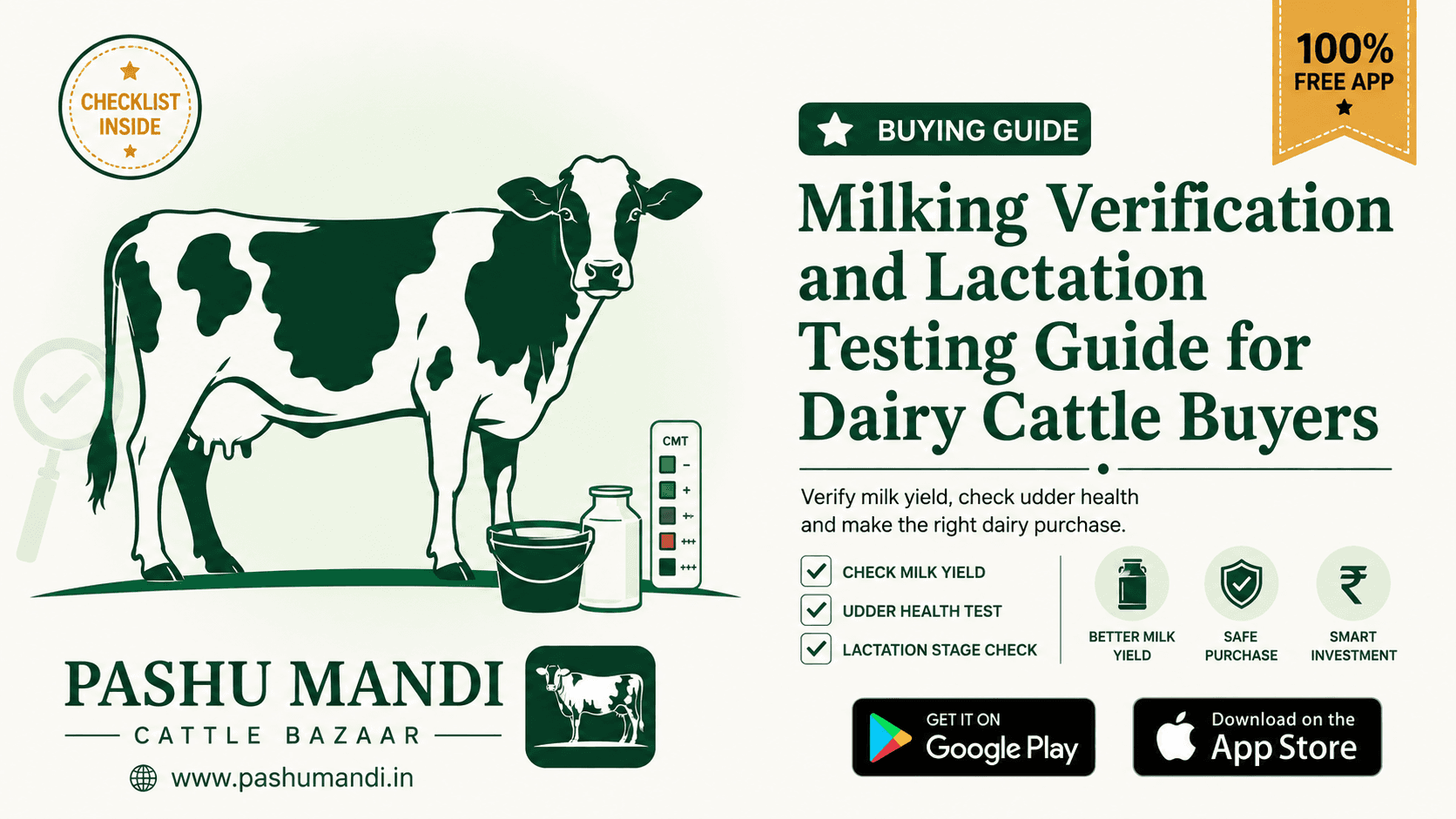
Introduction: The Importance of On-Site Milking Verification
In dairy farming, the primary economic value of a cow or buffalo lies in its sustained milk production, lactation persistence, and mammary health. While visual body conformation provides clues about an animal's dairy characteristics, claimed milk yields can vary widely due to stage of lactation, feeding, management, and individual health history.
Relying solely on verbal claims or single-milking demonstrations can lead to costly purchasing mistakes. Whether evaluating cattle at a regional livestock bazaar or through direct farm visits arranged on Pashu Mandi, adopting a structured, systematic milking verification protocol protects your investment and ensures animal welfare.
1. The 3-Milking Standard Verification Protocol
The single most reliable method for establishing true 24-hour milk yield is the three-milking protocol. Performing only one milking test leaves room for artificial inflation (such as intentionally skipping a prior milking to present a bloated udder).
- First Milking (The Evening Strip-Out): In the presence of the buyer or trusted representative, the animal is completely milked out in the evening. This establishes an accurate baseline and ensures no residual milk is carried forward into the test cycle.
- Second Milking (The Morning Test): Exactly 12 hours later, the morning milk is drawn, weighed using a calibrated spring or digital scale, and recorded.
- Third Milking (The Evening Test): 12 hours after the morning milking, the second full milking is conducted and weighed. The combined weight of the morning and evening milkings represents the true 24-hour daily lactation yield under current on-farm conditions.
2. Pre-Milking Udder and Teat Examination
Before any milk is drawn, conduct a detailed physical inspection of the mammary system while the animal is calm:
- Quarter Symmetry: Inspect the udder from behind and from both sides. All four quarters (fore and rear) should be balanced, well-attached, and positioned high relative to the hocks.
- Teat Structure and Placement: Teats should be uniform in length, cylindrical, perpendicularly oriented, and free from external warts (papillomas), deep cracks, lesions, or teat-end hyperkeratosis.
- Supernumerary (Extra) Teats: Check for extra rudimentary teats. While common, ensure they are not draining into functional quarters or interfering with hand or machine milking.
- Palpation: Gently palpate the udder texture with clean hands before milking. The tissue should be warm, resilient, and elastic, without localized heat, painful swelling, or hard lumps.
3. Testing Milk Quality and Quarter Health (The Strip Cup Test)
Never skip foremilk examination. Subclinical and mild clinical mastitis can drastically reduce future yield and spread pathogens across a dairy herd:
- Strip Cup Examination: Strip the first two to three streams of milk from each individual teat onto a dark strip cup plate or clean black surface.
- Visual Signs of Mastitis: Examine the foremilk carefully for curds, yellow clots, blood flakes, watery consistency, or abnormal discoloration. If any single quarter shows abnormal secretion, investigate further with a qualified veterinarian.
- Teat Canal Patency: Check the flow of the milk stream. The stream should be full, straight, and easy to express. A split, spraying, or extremely narrow stream indicates teat sphincter damage, stricture, or internal spider growth.
4. Assessing Let-Down Temperament and Calf Dependence
The milking process reveals vital temperament traits that impact daily farm operations:
- Calf Suckling and Weaning Status: Determine whether the cow or buffalo lets down milk independently (weaned) or requires the physical presence and suckling of its calf. If the calf is present, ensure the calf is healthy and verify how much milk is left for the calf versus drawn in the pail.
- Milking Ease and Docility: A docile dairy animal stands quietly without requiring severe leg tying (shackling) or showing aggressive kicking behavior. Notice whether the animal becomes agitated by changes in milkers or milking environments.
- Complete Evacuation: Observe how smoothly the milker finishes stripping the udder. Delayed let-down or incomplete emptying can indicate stress, discomfort, or hormonal imbalance.
5. Post-Milking Udder Evaluation: Spongy vs. Fleshy Tissue
What happens to the udder after all milk is drawn is one of the clearest indicators of true dairy capacity:
- True Dairy Udder (Glandular Tissue): A high-quality dairy udder shrinks significantly after milking, collapsing into soft, pliable, and wrinkled folds. When touched, it feels spongy and completely relaxed.
- Meaty or Fleshy Udder (Fibrous Tissue): An udder that remains bulky, firm, and heavy even after all milk has been extracted consists largely of non-productive connective and fatty tissue rather than active secretory tissue. Such animals rarely sustain high peak yields.
Practical Milking Inspection Checklist for Buyers
| Checkpoint | Ideal Observation | Warning Signs |
|---|---|---|
| 24-Hour Yield | Verified across full 3-milking cycle at 12-hr intervals | Single-milking demonstration with unverified prior holding time |
| Foremilk Quality | Clean, white, homogeneous liquid from all 4 teats | Clots, flakes, watery streaks, or pink/yellow discoloration |
| Teat Sphincters | Smooth, centered opening; single strong stream | Hard ring callus, leaking teats, or spray/blocked canal |
| Post-Milking Udder | Soft, pliable, wrinkled, completely collapsed | Hard, thick, heavy, or localized internal nodules |
हिन्दी सारांश: दुधारू पशु खरीद में मिल्किंग और लेवटी जांच गाइड
दुधारू गाय या भैंस खरीदते समय दूध की सही मात्रा और लेवटी के स्वास्थ्य की परख के लिए प्रमुख बिंदु:
- तीन समय की मिल्किंग (3-Milking Test): पहले शाम को पशु का पूरा दूध निकलवाकर खाली करें (बेसलाइन)। इसके बाद अगली सुबह और शाम का दूध तराजू से तौलकर 24 घंटे का सही उत्पादन मापें।
- चारों थनों की जांच: हर थन से पहली 2-3 धार काली कटोरी (स्ट्रिप कप) में डालकर देखें। दूध में छीछड़े, गांठ, पानी जैसा पतलापन या खून नहीं होना चाहिए।
- दूध निकालने के बाद लेवटी: दूध पूरी तरह निकलने के बाद लेवटी बिल्कुल ढीली, मुलायम और सिलवटों वाली (spongy) होनी चाहिए। अगर लेवटी खाली होने के बाद भी सख्त या भारी रहे, तो उसमें चर्बी या रेशेदार बीमारी हो सकती है।
- स्वभाव और पावसना: पशु बिना अधिक बांधे शांत खड़ा रहे और आसानी से पावसता (let-down) हो। बछड़े/कटड़े की जरूरत और उसकी सेहत की भी जांच करें।
ਪੰਜਾਬੀ ਸੰਖੇਪ: ਦੁਧਾਰੂ ਪਸ਼ੂ ਖਰੀਦ ਵੇਲੇ ਚੁਆਈ ਅਤੇ ਲੇਵੇ ਦੀ ਪਰਖ ਗਾਈਡ
ਡੇਅਰੀ ਗਾਵਾਂ ਅਤੇ ਮੱਝਾਂ ਖਰੀਦਣ ਸਮੇਂ ਦੁੱਧ ਦੀ ਸਹੀ ਮਾਤਰਾ ਅਤੇ ਲੇਵੇ ਦੀ ਸਿਹਤ ਜਾਂਚਣ ਲਈ ਜ਼ਰੂਰੀ ਨੁਕਤੇ:
- ਤਿੰਨ ਵੇਲੇ ਦੀ ਚੁਆਈ ਪਰਖ: ਪਹਿਲਾਂ ਸ਼ਾਮ ਨੂੰ ਲੇਵਾ ਪੂਰੀ ਤਰ੍ਹਾਂ ਖਾਲੀ ਕਰਵਾਓ। ਅਗਲੀ ਸਵੇਰ ਅਤੇ ਸ਼ਾਮ ਦੀ ਚੁਆਈ ਕੰਡੇ 'ਤੇ ਤੋਲ ਕੇ 24 ਘੰਟਿਆਂ ਦੇ ਅਸਲ ਦੁੱਧ ਦਾ ਹਿਸਾਬ ਲਗਾਓ।
- ਚਾਰੇ ਥਣਾਂ ਦੀ ਜਾਂਚ: ਹਰ ਥਣ ਵਿੱਚੋਂ ਪਹਿਲੀਆਂ ਧਾਰਾਂ ਕਾਲੇ ਬਰਤਨ ਵਿੱਚ ਕੱਢ ਕੇ ਦੇਖੋ ਕਿ ਦੁੱਧ ਵਿੱਚ ਕੋਈ ਫੁੱਟੀਆਂ, ਲਹੂ ਜਾਂ ਪਤਲਾਪਨ ਤਾਂ ਨਹੀਂ ਹੈ (ਮਸਟਾਈਟਿਸ/ਸਾੜੇ ਦੀ ਜਾਂਚ)।
- ਚੁਆਈ ਤੋਂ ਬਾਅਦ ਲੇਵੇ ਦੀ ਹਾਲਤ: ਦੁੱਧ ਚੋਣ ਮਗਰੋਂ ਲੇਵਾ ਬਿਲਕੁਲ ਨਰਮ, ਲਿਫਵਾਂ ਅਤੇ ਸੁੰਗੜਿਆ ਹੋਣਾ ਚਾਹੀਦਾ ਹੈ। ਚੁਆਈ ਤੋਂ ਬਾਅਦ ਵੀ ਸਖ਼ਤ ਰਹਿਣ ਵਾਲਾ ਲੇਵਾ ਮਾਸੂ ਅਤੇ ਬਿਮਾਰੀ ਦਾ ਸੰਕੇਤ ਹੋ ਸਕਦਾ ਹੈ।
- ਚੋਣ ਵੇਲੇ ਸੁਭਾਅ: ਪਸ਼ੂ ਸ਼ਾਂਤ ਸੁਭਾਅ ਦਾ ਹੋਵੇ ਅਤੇ ਸੌਖਿਆਂ ਹੀ ਦੁੱਧ ਉਤਾਰਦਾ ਹੋਵੇ। ਬੱਚੇ ਦੀ ਹਾਜ਼ਰੀ ਅਤੇ ਸਿਹਤ ਦੀ ਵੀ ਚੰਗੀ ਤਰ੍ਹਾਂ ਤਸੱਲੀ ਕਰੋ।
Important Note
The information in this article is for general educational purposes only. It is not professional veterinary advice, legal advice, or financial advice. Always consult a qualified veterinarian for animal health decisions, a legal professional for legal matters, and a financial advisor for investment decisions. Livestock prices, market conditions, and practices vary by region and change over time — please verify with local sources before making important decisions. This content does not represent the views of any government body and does not guarantee any specific outcome. Found an error? Email us at info@pashumandi.in.
Frequently Asked Questions
Related Articles

Balanced Feeding Guide for Dairy Cattle and Buffaloes: Nutrition, Rations & Seasonal Care
Master dairy cattle and buffalo nutrition in India. Comprehensive guide covering roughage-to-concentrate ratios, green fodder planning, dry matter intake, and mineral balancing.
Dairy Cattle Buying Guide: Step-by-Step Physical Inspection Checklist
Essential physical inspection checklist and safety guide for farmers buying dairy cows and buffaloes in local mandis or online marketplaces.

How to Sell Dairy Cattle and Buffaloes Online: Photography, Listings, and Fair Pricing Guide
Step-by-step guide for dairy farmers to sell cattle and buffaloes online on digital mandis. Learn livestock photography, transparent listing writing, fair price setting, and scam-free buyer negotiations.
Ready to Buy or Sell Cattle?
Download Pashu Mandi — India's trusted cattle marketplace. Browse thousands of listings, connect with sellers directly, and find your perfect animal.