Rathi Cattle Breed Guide: Physical Traits, Arid Resilience, Origin & Dairy Management
Introduction to the Rathi Cattle Breed
The Rathi cattle breed is one of the most celebrated and hardy indigenous milch cattle breeds of northwestern India. Originating in the arid heartlands of Rajasthan—primarily across Bikaner, Ganganagar, Hanumangarh, and Jaisalmer districts—the Rathi cow is renowned for its remarkable capacity to produce quality milk under extreme desert conditions, sparse vegetation, and scorching summer temperatures.
Cataloged and recognized by the ICAR-National Bureau of Animal Genetic Resources (NBAGR) (Accession Code: INDIA_CATTLE_1700_RATHI_03020), the Rathi breed represents a vital genetic resource for India's sustainable dairy sector. Developed historically by nomadic pastoralist communities such as the Raths (from whom the breed derives its name), these animals have evolved exceptional grazing efficiency, high metabolic tolerance to thermal stress, and natural resistance to common tropical tick-borne diseases.
For dairy farmers and pastoralists across arid and semi-arid regions seeking a resilient, low-maintenance native cow, understanding the physical conformation, feeding regimen, and management practices of the Rathi breed is essential. On Pashu Mandi, dairy producers frequently evaluate Rathi livestock for farm rearing and breed conservation.
Origin and Breeding Tract
The native breeding tract of Rathi cattle lies in the hot, arid northwestern region of Rajasthan within the Thar Desert ecosystem:
- Core Districts: Bikaner (particularly Lunkaransar, Kolayat, and Khajuwala tehsils), Sri Ganganagar, Hanumangarh, and parts of Jaisalmer and Churu.
- Environmental Adaptation: The native tract experiences severe climatic extremes—summer temperatures often exceeding 45°C to 48°C and winter temperatures dropping near freezing, with low annual rainfall (less than 200–300 mm).
- Genetic Lineage: While the distinct Rathi breed is maintained as an efficient milch animal, local pastoralists historically distinguished between the milch-type Rathi (influenced by Sahiwal, Red Sindhi, and Tharparkar strains) and the draft-type Rath strain found near Alwar. The recognized NBAGR Rathi standard denotes the renowned dairy-type animal of the Bikaner tract.
Distinctive Physical Characteristics and Breed Conformation
Rathi cattle possess distinctive visual characteristics that differentiate them from other zebu (Bos indicus) breeds of northwestern India:
| Physical Feature | Standard Conformation in Rathi Cattle |
|---|---|
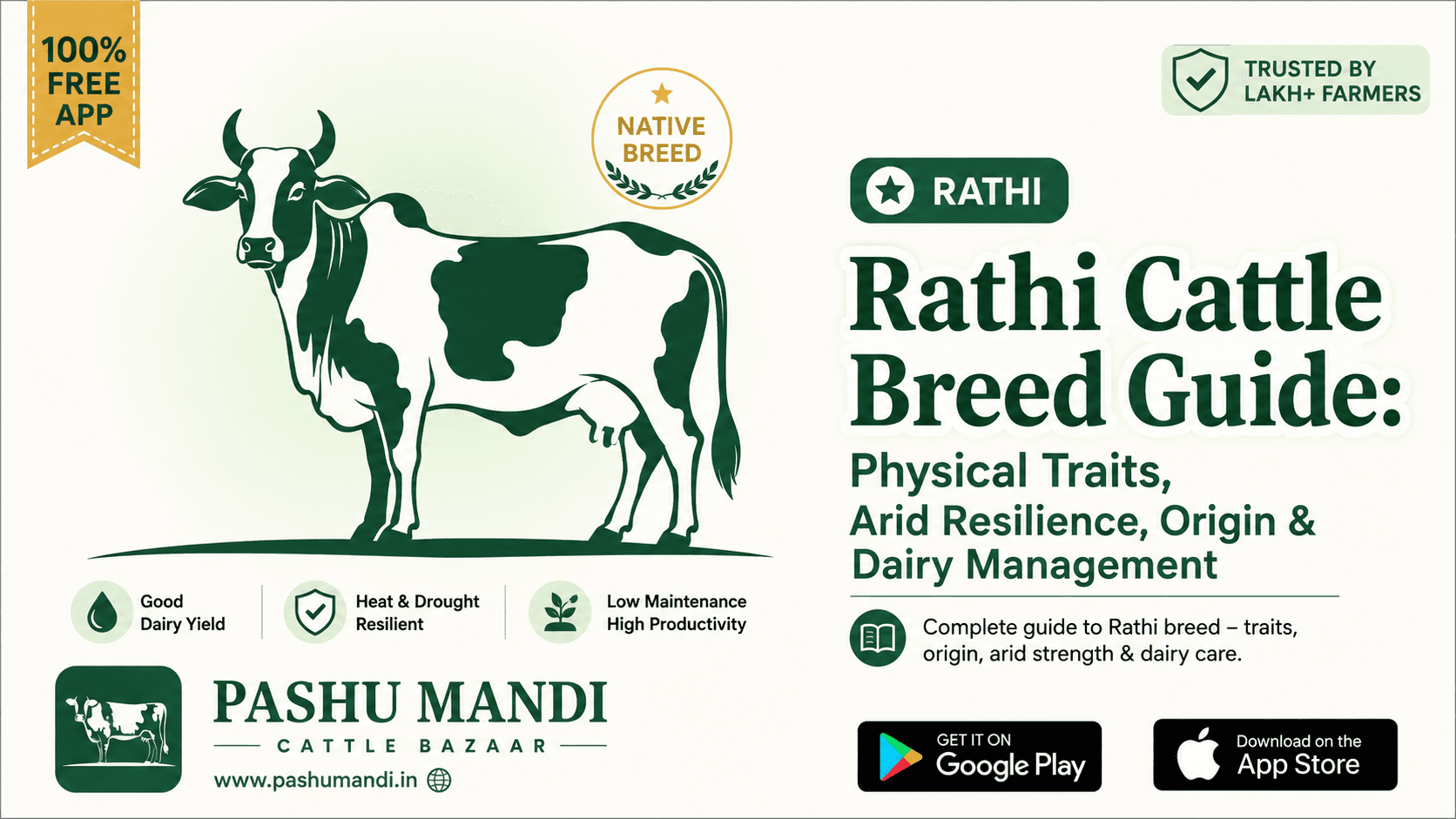
| Coat Color & Pattern | Predominantly brown (reddish-brown to dark brown) with distinctive white patches or mottling (spotted/piebald pattern). Some individuals may be completely brown or greyish-white with brown spots. |
| Body Size & Build | Medium-sized, compact, and cylindrical dairy conformation. Symmetrical frame with strong legs and durable hooves adapted to sandy desert terrain. |
| Head & Forehead | Broad and flat or slightly dished between the eyes, with a prominent poll and mild facial depression. Calm, gentle eye expression. |
| Horns | Short to medium in length, curving outward, upward, and slightly inward, with blunt or rounded tips. |
| Ears | Medium-sized, alert, and horizontal or slightly drooping without excessive pendulous fold. |
| Hump & Dewlap | Cows have a moderately developed hump; bulls exhibit a well-developed, prominent hump. Medium-sized, loose dewlap with moderate folds aiding thermoregulation. |
| Udder & Teats | Well-developed, pliable bowl-shaped udder with prominent milk veins. Cylindrical, squarely placed teats with rounded tips for effortless hand or machine milking. |
| Tail & Switch | Long, slender tail reaching well below the hock joint, terminating in a prominent black switch (tail brush). |
Key Strengths: Climate Resilience and Dairy Potential
Rathi cattle offer several distinct physiological and economic advantages for smallholders and commercial dairy enterprises:
- Outstanding Heat and Drought Tolerance: Rathi cows maintain normal rumination and metabolic function even during peak summer heat waves, minimizing heat-induced milk yield drops compared to exotic or crossbred cattle.
- Efficient Forage Conversion: Evolved in sparse desert pastures, Rathi cattle efficiently digest coarse crop residues, arid range grasses (such as Lasiurus scindicus / Sewan grass and Cenchrus ciliaris / Dhaman), and drought-resistant shrub foliage.
- A2 Beta-Casein Milk Profile: As a pure indigenous zebu breed, Rathi cows naturally produce A2 beta-casein milk, which is increasingly valued in domestic and specialty dairy markets for nutrition and ease of digestion.
- Docile Temperament & Longevity: Rathi cows are exceptionally gentle and easy to handle during milking. They maintain productive lactation cycles over many calving seasons with relatively low veterinary intervention costs.
- Disease & Tick Resistance: High natural resistance against ectoparasites (ticks, mites) and tropical vector-borne infections significantly lowers medication expenditure.
Dairy Management, Feeding, and Housing for Rathi Cattle
To optimize the health and lactation performance of Rathi cows, dairy managers should implement balanced management practices tailored to native cattle:
1. Feeding and Nutritional Strategy
While hardy, high-yielding Rathi cows require balanced rations for sustained production and timely post-calving breeding:
- Dry Roughage: Wheat straw (bhusa), pearl millet stover (bajra kadbi), and sorghum stover form the baseline roughage.
- Green Fodder: Provide leguminous green fodder (such as berseem, lucerne/alfalfa, or cowpea) combined with non-leguminous grasses (sorghum, maize, or hybrid napier) to maintain rumen microflora balance.
- Concentrate Mix: Formulate a balanced concentrate feed containing crushed grains (maize, barley), oil cakes (mustard cake, cotton seed cake), and agro-industrial byproducts (wheat bran, pulse chuni) according to milk yield and stage of lactation.
- Mineral Mixture and Salt: Supply 40–50 grams of high-quality area-specific chelated mineral mixture along with 30 grams of common salt daily per adult cow to prevent silent heat and maintain reproductive health.
- Clean Drinking Water: Ensure continuous access to fresh, cool, clean drinking water. High-producing lactating cows consume 60 to 90 liters of water daily during hot months.
2. Housing and Shelter Management
Proper housing protects animals from thermal stress and supports hygiene:
- Construct well-ventilated, elevated sheds with a minimum ceiling height of 10–12 feet. Use thatch, clay tiles, or insulated roofing to reflect radiant heat.
- Ensure non-slippery, grooved concrete or compacted earth flooring with a 1:40 slope toward a covered drainage channel for quick effluent evacuation.
- Provide shade trees and misting fans or evaporative cooling systems in waiting yards during intense summer dry periods.
3. Preventive Healthcare and Breeding
- Vaccination: Maintain a strict annual vaccination schedule against Foot-and-Mouth Disease (FMD), Haemorrhagic Septicaemia (HS), and Black Quarter (BQ) in consultation with a qualified local veterinary officer.
- Deworming: Administer broad-spectrum anthelmintics before and after the monsoon season based on fecal examination.
- Selective Breeding: Use pedigree-tested, disease-screened Rathi bulls or certified high-genetic-merit frozen semen from recognized breeding stations to conserve breed purity and enhance genetic productivity.
Physical Inspection Checklist for Buyers
When purchasing a Rathi cow in physical livestock mandis or evaluating verified listings on Pashu Mandi, inspect the following key indicators:
- Breed Purity Indicators: Look for the characteristic brown-and-white mottled coat, broad flat forehead, short-to-medium horns, and loose dewlap.
- Udder Symmetry & Teats: Check for a soft, pliable, well-attached udder free of hard fibrous knots (indicating past chronic mastitis). Ensure all four teats are uniform, unobstructed, and free of warts or strictures.
- Gait and Hoof Health: Observe the cow walking on level ground; the gait should be steady and uninhibited, without lameness or abnormal hoof wear.
- Teeth and Age Verification: Inspect the lower incisors to confirm the animal's exact age (e.g., 2-tooth, 4-tooth, or 6-tooth) to avoid purchasing aged cows past their prime productive window.
- Milking Demonstration: Always verify milking ease and actual yield through consecutive morning and evening test milkings before finalizing payment.
FAQ: Frequently Asked Questions About Rathi Cattle
Where does the Rathi cattle breed originate?
Rathi cattle originate from the arid Thar Desert region of northwestern Rajasthan, predominantly across Bikaner, Sri Ganganagar, Hanumangarh, and Jaisalmer districts.
What is the typical coat color of a Rathi cow?
Rathi cattle typically have a brown (reddish-brown to dark brown) coat with prominent white patches or mottling. Some individuals may be solid brown or greyish-white with brown spots.
Are Rathi cows suitable for commercial dairy farming?
Yes. Due to their outstanding heat tolerance, disease resistance, efficient conversion of coarse dry fodder, and production of nutritious A2 milk, Rathi cows are well-suited for low-cost, sustainable dairy farming in arid and semi-arid climates.
How does Rathi differ from Sahiwal and Tharparkar cattle?
While all three are superior indigenous dairy breeds of northwestern India, Sahiwal has a solid reddish-brown coat and very loose skin (Lola), Tharparkar has a distinct lyre-shaped horn structure and pure white to light grey coat, whereas Rathi is characterized by its distinctive brown-and-white mottled coat and medium compact frame.
हिन्दी सारांश (Hindi Summary): राठी गाय की पहचान, विशेषताएं एवं पालन मार्गदर्शिका
राठी गाय भारत के उत्तर-पश्चिमी राजस्थान (मुख्य रूप से बीकानेर, श्रीगंगानगर, हनुमानगढ़ और जैसलमेर) की एक प्रसिद्ध और अत्यधिक सहनशील देशी दुधारू गोवंश नस्ल है।
- शारीरिक पहचान: लाल-भूरा या गहरा भूरा रंग जिस पर सफेद चित्ते (चकत्ते/मिश्रित रंग) होते हैं, चौड़ा माथा, मध्यम आकार के सींग जो बाहर और ऊपर की ओर मुड़े होते हैं, मध्यम गलकंबल और सुविकसित अयन (लेवटी)।
- प्रमुख विशेषताएं: रेगिस्तानी भीषण गर्मी और सूखे को आसानी से सहन करने की अद्भुत क्षमता, कम और सूखे चारे पर भी अच्छा प्रदर्शन, रोग प्रतिरोधक क्षमता और पोषक ए2 (A2) दूध।
- देखभाल व प्रबंधन: हवादार शेड, संतुलित हरा व सूखा चारा, पौष्टिक दाना मिश्रण, प्रतिदिन 40-50 ग्राम खनिज मिश्रण (मिनरल मिक्सचर) और ताजा साफ पानी। खरीदने से पहले हमेशा थनों की जांच और सुबह-शाम की मिल्किंग की पुष्टि अवश्य करें।
ਪੰਜਾਬੀ ਸੰਖੇਪ (Punjabi Summary): ਰਾਠੀ ਗਾਂ ਦੀ ਨਸਲ, ਪਛਾਣ ਅਤੇ ਡੇਅਰੀ ਸੰਭਾਲ
ਰਾਠੀ ਗਾਂ ਰਾਜਸਥਾਨ ਦੇ ਥਾਰ ਮਾਰੂਥਲ ਖੇਤਰ (ਮੁੱਖ ਤੌਰ 'ਤੇ ਬੀਕਾਨੇਰ, ਸ਼੍ਰੀ ਗੰਗਾਨਗਰ ਅਤੇ ਹਨੂੰਮਾਨਗੜ੍ਹ) ਦੀ ਇੱਕ ਮਸ਼ਹੂਰ ਅਤੇ ਮਜ਼ਬੂਤ ਦੇਸੀ ਨਸਲ ਹੈ ਜੋ ਡੇਅਰੀ ਕਿਸਾਨਾਂ ਵਿੱਚ ਬਹੁਤ ਪ੍ਰਸਿੱਧ ਹੈ।
- ਮੁੱਖ ਪਛਾਣ: ਭੂਰੇ ਜਾਂ ਲਾਲ-ਭੂਰੇ ਰੰਗ ਉੱਤੇ ਚਿੱਟੇ ਚਟਾਕ (ਚਿੱਤਕਬਰਾ ਰੰਗ), ਚੌੜਾ ਮੱਥਾ, ਦਰਮਿਆਨੇ ਆਕਾਰ ਦੇ ਸਿੰਗ, ਮਜ਼ਬੂਤ ਪੈਰ ਅਤੇ ਵਧੀਆ ਬਣਤਰ ਵਾਲਾ ਲੇਵਾ।
- ਖ਼ਾਸ ਖੂਬੀਆਂ: ਕੜਕਦੀ ਗਰਮੀ ਅਤੇ ਸੋਕੇ ਨੂੰ ਸਹਿਣ ਦੀ ਸਮਰੱਥਾ, ਖ਼ੁਰਾਕ ਦੀ ਵਧੀਆ ਪਾਚਨ ਸ਼ਕਤੀ, ਬਿਮਾਰੀਆਂ ਪ੍ਰਤੀ ਉੱਚੀ ਰੋਗ ਪ੍ਰਤੀਰੋਧਕ ਸ਼ਕਤੀ ਅਤੇ ਪੌਸ਼ਟਿਕ ਏ2 (A2) ਦੇਸੀ ਦੁੱਧ।
- ਸਾਂਭ-ਸੰਭਾਲ: ਸਾਫ਼ ਹਵਾਦਾਰ ਸ਼ੈੱਡ, ਸੰਤੁਲਿਤ ਹਰਾ-ਸੁੱਕਾ ਚਾਰਾ, ਰੋਜ਼ਾਨਾ ਮਿਨਰਲ ਮਿਕਸਚਰ ਅਤੇ ਤਾਜ਼ਾ ਪਾਣੀ। ਪਸ਼ੂ ਮੰਡੀ ਤੋਂ ਖ਼ਰੀਦਣ ਸਮੇਂ ਉਮਰ (ਦੰਦਾਂ ਦੀ ਜਾਂਚ) ਅਤੇ ਚੁਆਈ ਦੀ ਪੁਸ਼ਟੀ ਜ਼ਰੂਰ ਕਰੋ।
Important Note
The information in this article is for general educational purposes only. It is not professional veterinary advice, legal advice, or financial advice. Always consult a qualified veterinarian for animal health decisions, a legal professional for legal matters, and a financial advisor for investment decisions. Livestock prices, market conditions, and practices vary by region and change over time — please verify with local sources before making important decisions. This content does not represent the views of any government body and does not guarantee any specific outcome. Found an error? Email us at info@pashumandi.in.
Frequently Asked Questions
Related Articles
Dairy Cattle Buying Guide: Step-by-Step Physical Inspection Checklist
Essential physical inspection checklist and safety guide for farmers buying dairy cows and buffaloes in local mandis or online marketplaces.
Rajasthan Pashu Mandis and Cattle Fairs: Major Melas, Trading Norms & Farmer Guide
Comprehensive guide to Rajasthan's state livestock fairs and cattle mandis, covering historical melas like Tilwara and Nagaur, transit rules, and modern trading.
Sahiwal Cattle Breed Profile: Traits, Climate Resilience, and Dairy Care
Comprehensive guide to the indigenous Sahiwal cow: origin, heat tolerance, physical characteristics, and sustainable herd management practices.
Ready to Buy or Sell Cattle?
Download Pashu Mandi — India's trusted cattle marketplace. Browse thousands of listings, connect with sellers directly, and find your perfect animal.