Silage Making and Green Fodder Preservation Guide for Dairy Cattle and Buffaloes
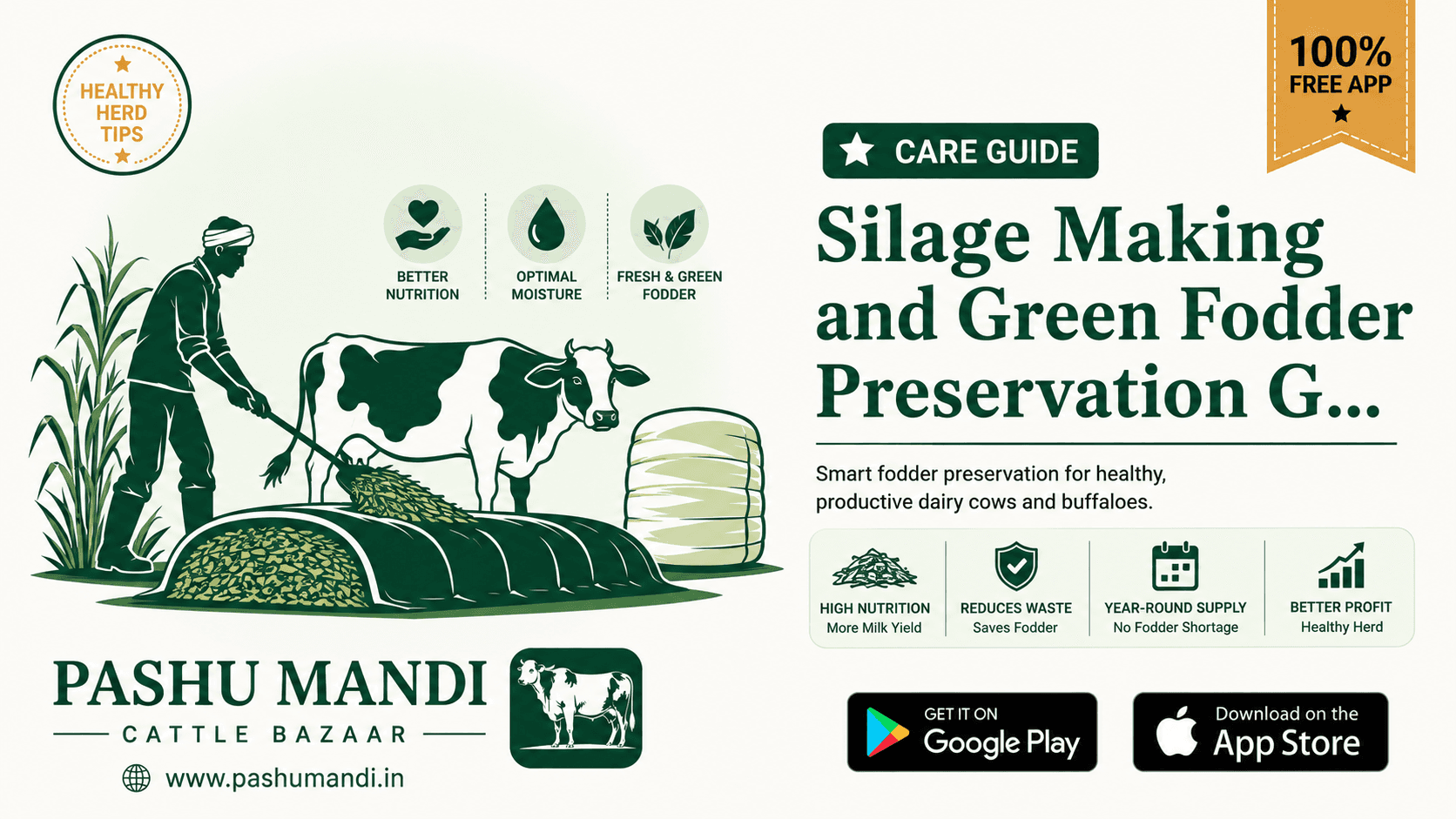
Why Silage Making is Crucial for Dairy Farming
Green fodder availability in India is often seasonal, resulting in acute nutritional deficits for dairy cattle and buffaloes during the lean summer and winter months. Silage making—the process of preserving high-moisture green fodder through controlled anaerobic (oxygen-free) lactic acid fermentation—is the most effective method for ensuring year-round green nutrition on commercial and smallholder dairy farms.
Feeding quality silage maintains rumen microbial health, prevents sudden seasonal drops in milk production, supports reproductive cycling, and significantly reduces reliance on costly commercial concentrate feeds.
Best Crops for Silage Making
The success of silage depends primarily on the soluble carbohydrate (sugar) and dry matter content of the harvested forage. Ideal silage crops include:
- Maize (Corn / Makka): The gold standard for silage due to high starch content in cobs, excellent fermentable sugars, and palatability.
- Sorghum (Jowar / Chari): Drought-resistant and high-yielding; optimal when harvested at the milk-to-dough stage.
- Pearl Millet (Bajra / Hybrid Napier): Suitable when cut before stem lignification; often mixed with legumes or molasses to enhance fermentation.
- Oats (Jaye): Excellent winter silage crop with high digestibility and protein content.
Critical Silage Quality Parameters
High-quality silage must meet specific physical and chemical standards:
| Parameter | Ideal Range | Importance |
|---|---|---|
| Moisture Content | 65% to 70% (30-35% Dry Matter) | Prevents seepage losses while enabling tight anaerobic packing. |
| Chop Length | 1.5 cm to 2.5 cm (0.5 to 1 inch) | Ensures maximum air expulsion and stimulates cow cud chewing. |
| Target pH | 3.8 to 4.2 | Inhibits putrefying Clostridia bacteria and fungal mold growth. |
| Aroma & Color | Pleasant fruity-acidic aroma, olive-green/golden-yellow | Indicates dominant lactic acid production without butyric spoilage. |
Step-by-Step Silage Making Process
Step 1: Harvesting at the Right Maturity
Harvest cereal crops (especially maize) at the milk-to-dough stage (when the milk line on maize kernels is between 1/3 to 1/2). Harvesting too early results in excess moisture, nutrient leakage, and sour fermentation; harvesting too late leads to poor compaction and reduced digestibility.
Step 2: Chaffing (Chopping)
Chop the harvested green fodder immediately using a mechanized chaff cutter to a uniform particle length of 1.5–2.5 cm. Fine, uniform chopping allows rapid compaction and releases cell sap containing sugars for fermenting bacteria.
Step 3: Silo Pit / Bunker Preparation
Choose an elevated, well-drained site away from waterlogging. Types of silos include:
- Trench / Bunker Silos: Concrete or brick-lined underground trenches, ideal for medium to large dairy herds.
- Tower or Silo Bags: High-density poly-bags (50 kg to 500 kg), ideal for small farmers or trial batches.
- Surface Clamp / Mound Silos: Elevated plastic-covered mounds built on level hard ground.
Line the base and walls of pit silos with 200–250 micron UV-stabilized polythene sheets to prevent soil contamination and air ingress.
Step 4: Layering and Compaction (Air Expulsion)
Fill the silo continuously in thin layers (15–20 cm thick). Compact each layer thoroughly using a tractor, heavy mechanical roller, or manual stamping. The goal is to eliminate all trapped oxygen quickly to establish anaerobic conditions.
Step 5: Airtight Sealing and Curing
Once the pit is filled to a dome shape above ground level, cover tightly with heavy-gauge UV-resistant silage plastic sheeting. Weight the plastic down uniformly with used vehicle tires, sandbags, or a 4–6 inch layer of dry soil. Ensure the edges are firmly buried in trenches to prevent air leakage. Allow the silage to cure undisturbed for 45 to 60 days.
Feeding Guidelines and Management
When opening and feeding silage to dairy cattle and buffaloes, maintain strict quality protocols:
- Gradual Introduction: Introduce silage slowly over 7 to 10 days (starting with 4–5 kg/day) to allow rumen microbes to adapt to the lactic acid content.
- Daily Feeding Rates: Mature dairy cows and buffaloes can consume 15 to 25 kg of silage per day depending on body weight, milk yield, and dry matter requirements.
- Maintain Dry Fodder Balance: Always feed 3–5 kg of dry roughage (wheat straw/bhusa) alongside silage to maintain rumen motility and milk fat percentage.
- Pit Management: Cut and remove silage vertically across the face; never dig deep holes into the pit. Seal the exposed plastic face immediately after daily extraction to prevent secondary aerobic spoilage.
- Discard Spoiled Silage: Never feed blackened, moldy, slimy, or foul-smelling silage to animals, as mycotoxins can cause severe digestive upset and abortion in pregnant livestock.
हिन्दी सारांश (Hindi Summary): साइलेज (मुरब्बा) निर्माण एवं प्रबंधन
साइलेज (हरा चारा मुरब्बा) अधिक नमी वाले हरे चारे को बिना हवा (अवायवीय स्थिति) में किण्वन (फर्मेंटेशन) करके सुरक्षित रखने की वैज्ञानिक तकनीक है। इससे गर्मियों और चारे की कमी वाले मौसम में भी दुधारू पशुओं को पौष्टिक हरा चारा मिलता रहता है।
- सर्वोत्तम फसलें: मक्का (सर्वश्रेष्ठ), ज्वार, बाजरा और जई। फसल को दाने में दूधिया-गाढ़ापन आने (मिल्क-टू-डो स्टेज) पर काटें।
- बनाने की विधि: चारे को 1.5 से 2.5 सेमी के टुकड़ों में कुट्टी (चॉफ) करें। गड्ढे या बंकर में परत-दर-परत भरकर ट्रैक्टर या वजन से अच्छी तरह दबाएं ताकि सारी हवा निकल जाए। ऊपर से 200-250 माइक्रोन प्लास्टिक शीट से पूरी तरह एयरटाइट बंद करके 45-60 दिनों तक पकने दें।
- खिलाने के नियम: प्रतिदिन जरूरत अनुसार ऊपर से नीचे सीधा काटें। सड़ा या फफूंद लगा साइलेज कभी न खिलाएं। प्रति वयस्क पशु 15-25 किग्रा साइलेज के साथ 3-5 किग्रा सूखा भूसा अवश्य दें।
ਪੰਜਾਬੀ ਸੰਖੇਪ (Punjabi Summary): ਸਾਈਲੇਜ (ਹਰਾ ਚਾਰਾ ਆਚਾਰ) ਬਣਾਉਣ ਦਾ ਤਰੀਕਾ
ਸਾਈਲੇਜ ਹਰੇ ਚਾਰੇ ਨੂੰ ਬਿਨਾਂ ਹਵਾ ਦੇ ਦਬਾ ਕੇ ਲੰਮੇ ਸਮੇਂ ਲਈ ਸਾਂਭਣ ਦਾ ਵਧੀਆ ਤਰੀਕਾ ਹੈ, ਜਿਸ ਨਾਲ ਗਰਮੀਆਂ ਅਤੇ ਚਾਰੇ ਦੀ ਕਿੱਲਤ ਦੌਰਾਨ ਦੁਧਾਰੂ ਪਸ਼ੂਆਂ ਨੂੰ ਪੌਸ਼ਟਿਕ ਹਰਾ ਚਾਰਾ ਮਿਲਦਾ ਰਹਿੰਦਾ ਹੈ।
- ਮੁੱਖ ਫ਼ਸਲਾਂ: ਮੱਕੀ (ਸਭ ਤੋਂ ਉੱਤਮ), ਜਵਾਰ, ਬਾਜਰਾ ਅਤੇ ਜਵੀ। ਮੱਕੀ ਦੇ ਦਾਣਿਆਂ ਵਿੱਚ ਦੁੱਧ ਪੱਕਣ ਵੇਲੇ ਕਟਾਈ ਕਰੋ।
- ਤਿਆਰ ਕਰਨ ਦਾ ਤਰੀਕਾ: ਕੁਤਰਾ 1.5 ਤੋਂ 2.5 ਸੈਂਟੀਮੀਟਰ ਕਰੋ, ਟੋਏ ਜਾਂ ਬੰਕਰ ਵਿੱਚ ਚੰਗੀ ਤਰ੍ਹਾਂ ਦਬਾਅ ਕੇ ਸਾਰੀ ਹਵਾ ਕੱਢ ਦਿਓ। ਮੋਟੀ ਪਲਾਸਟਿਕ ਸ਼ੀਟ ਨਾਲ ਏਅਰਟਾਈਟ ਬੰਦ ਕਰਕੇ 45-60 ਦਿਨ ਪੱਕਣ ਦਿਓ।
- ਖੁਆਉਣ ਦੇ ਨਿਯਮ: ਹੌਲੀ-ਹੌਲੀ ਖੁਰਾਕ ਵਿੱਚ ਸ਼ਾਮਲ ਕਰੋ। ਉੱਲੀ ਲੱਗਿਆ ਜਾਂ ਖ਼ਰਾਬ ਸਾਈਲੇਜ ਕਦੇ ਨਾ ਖੁਆਓ। ਰੋਜ਼ਾਨਾ 15-25 ਕਿੱਲੋ ਸਾਈਲੇਜ ਦੇ ਨਾਲ 3-5 ਕਿੱਲੋ ਸੁੱਕਾ ਤੂੜੀ ਜ਼ਰੂਰ ਦਿਓ।
Important Note
The information in this article is for general educational purposes only. It is not professional veterinary advice, legal advice, or financial advice. Always consult a qualified veterinarian for animal health decisions, a legal professional for legal matters, and a financial advisor for investment decisions. Livestock prices, market conditions, and practices vary by region and change over time — please verify with local sources before making important decisions. This content does not represent the views of any government body and does not guarantee any specific outcome. Found an error? Email us at info@pashumandi.in.
Frequently Asked Questions
Related Articles

Balanced Feeding Guide for Dairy Cattle and Buffaloes: Nutrition, Rations & Seasonal Care
Master dairy cattle and buffalo nutrition in India. Comprehensive guide covering roughage-to-concentrate ratios, green fodder planning, dry matter intake, and mineral balancing.
Dairy Cattle Buying Guide: Step-by-Step Physical Inspection Checklist
Essential physical inspection checklist and safety guide for farmers buying dairy cows and buffaloes in local mandis or online marketplaces.
Dairy Cattle Mastitis Prevention & Udder Health: Hygiene Protocols, Milking Routines & Early Detection Guide
Comprehensive practical guide to mastitis prevention in dairy cows and buffaloes: milking hygiene, strip cup testing, teat dipping, dry cow management, and veterinary care.
Ready to Buy or Sell Cattle?
Download Pashu Mandi — India's trusted cattle marketplace. Browse thousands of listings, connect with sellers directly, and find your perfect animal.