Tharparkar Cattle Breed Guide: Physical Traits, Desert Resilience, Origin & Dairy Management
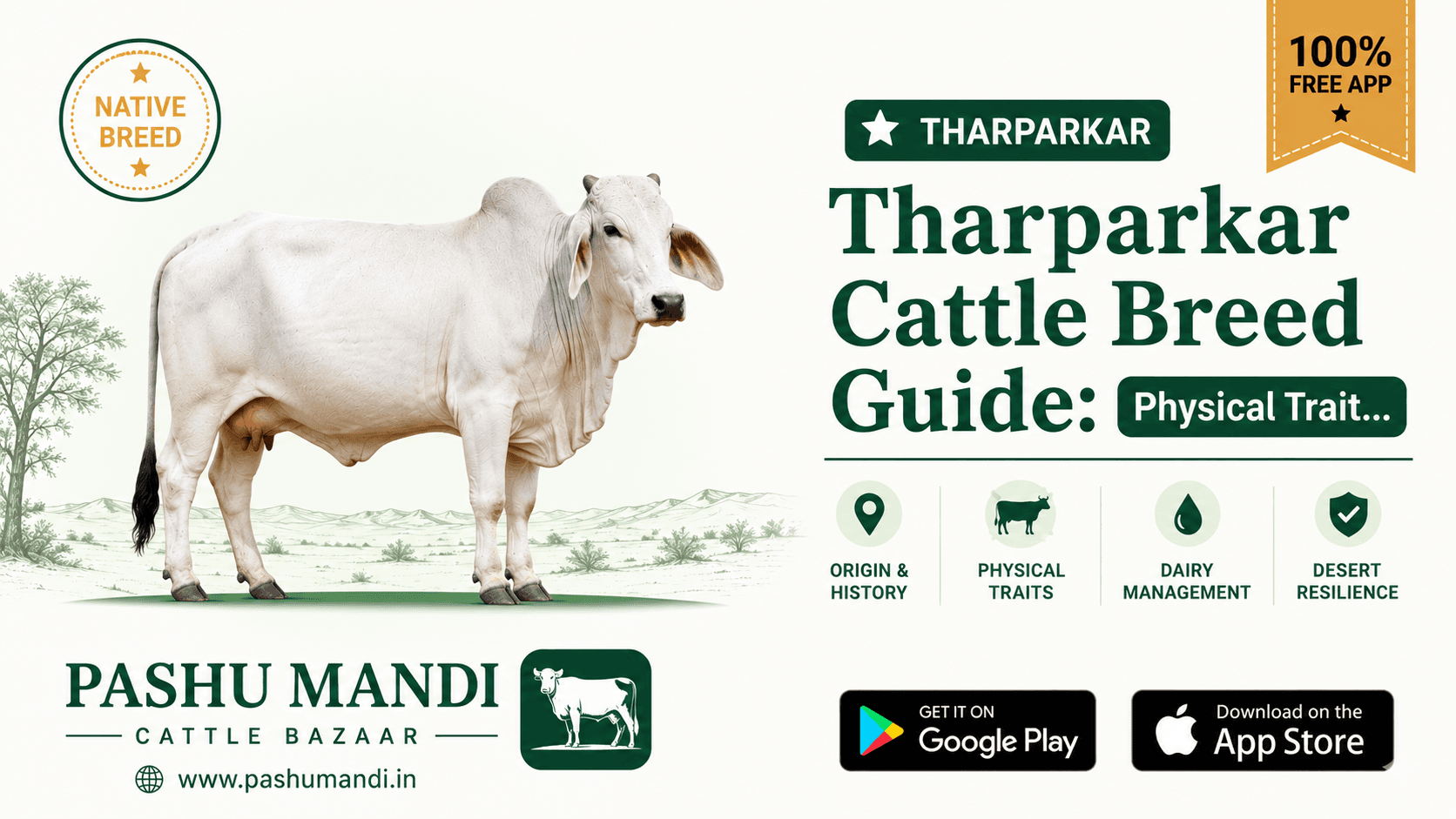
Introduction to the Tharparkar Cattle Breed
The Tharparkar cattle breed—also known historically as Thari or White Sindhi—is one of the most resilient and celebrated indigenous dual-purpose cattle breeds of the Indian subcontinent. Originating in the arid expanse of the Thar Desert bordering Rajasthan and Gujarat, this remarkable zebu (Bos indicus) breed has evolved over centuries to thrive in harsh climatic conditions characterized by severe drought, intense summer heat, and sparse native vegetation.
Registered and cataloged by the ICAR-National Bureau of Animal Genetic Resources (NBAGR), Tharparkar cattle are prized across northwestern India for their combination of reliable dairy yield, robust draft capacity of bullocks, superior heat tolerance, and natural tick resistance. For smallholder dairy farmers and commercial gaushalas operating in arid or semi-arid zones, the Tharparkar cow represents a low-maintenance, cost-effective indigenous livestock asset.
Geographical Origin and Breeding Tract
The native home tract of Tharparkar cattle encompasses the arid Thar Desert belt, historically extending across:
- Rajasthan: Districts of Barmer, Jaisalmer, Jodhpur, and Bikaner.
- Gujarat: The semi-arid and coastal border areas of Kutch and Banaskantha.
- Central Government Breeding Stations: Key breeding farms such as the Central Cattle Breeding Farm (Suratgarh, Rajasthan) and various state agricultural universities actively maintain pedigree herds.
Distinct Physical Characteristics of Tharparkar Cattle
Identifying purebred Tharparkar cattle involves observing several classic physical markers established in breed standard guidelines:
- Coat Color: The typical coat is white or light grey. In mature bulls, the neck, shoulders, and hump often turn darker grey or blackish-grey, especially in winter. The coat reflects solar radiation effectively, aiding in heat dissipation.
- Head and Face: Medium-sized head with a broad, flat or slightly convex forehead between horn bases. The face is clean and proportionate.
- Horns: Medium in length, curving gently outward, upward, and slightly inward in a lyre-like or curved shape with pointed tips.
- Ears: Moderately long, semi-pendulous, and alert, lined with fine hair.
- Hump and Dewlap: Prominent, firm hump in males; moderately developed in females. The dewlap is well-developed, thin, and pliable with soft folds, providing increased surface area for thermal regulation.
- Body Frame: Medium, compact, well-proportioned body with deep chest, straight backline, strong legs, and hard hooves built for walking long distances over sandy soil.
- Udder Structure: Moderately developed udder with uniform quarters, well-spaced cylindrical teats, and prominent milk veins.
Key Performance and Management Characteristics
Tharparkar cattle are valued for distinct behavioral and productive traits:
- Dual-Purpose Utility: Cows provide steady milk yields suitable for family consumption and local dairy cooperatives, while Tharparkar bullocks are famous for their endurance, steady walking speed, and strength in agricultural plowing and transport on sandy desert tracks.
- Exceptional Heat and Drought Tolerance: Their light coat, efficient sweat glands, and low basal metabolic rate enable them to graze under intense desert sun without suffering severe heat exhaustion.
- Disease and Parasite Resilience: Like many indigenous zebu breeds, Tharparkars exhibit strong natural resistance to tick-borne hemoprotozoan diseases and common tropical infections under good farm hygiene.
- Forage Efficiency: Tharparkars can convert coarse, fibrous desert grasses, shrubs, and crop residues (such as bajra karbi and jowar stalks) efficiently into milk and energy.
Dairy Management, Feeding, and Housing Practices
To optimize herd health and productive lifespan in Tharparkar cows, follow structured management principles:
1. Housing and Microclimate
Provide well-ventilated, east-west oriented open or semi-covered sheds with non-slippery brick or grooved concrete floors. High roof clearance (10-12 feet) with thatch or reflective sheeting keeps temperatures manageable during peak summer.
2. Scientific Nutritional Strategy
While Tharparkar cows are hardy foragers, optimal lactation requires a balanced ration:
- Dry Roughage: Good quality wheat straw (bhusa), bajra or jowar stover.
- Green Fodder: Cultivated seasonal legumes (berseem, cowpea, lucerne) and cereals (maize, sorghum, oat) or preserved green silage.
- Concentrate Mixture: Formulated cattle feed containing 18-20% crude protein, supplemented with bypass fat during early lactation.
- Mineral Mixture & Salt: 40-50g of area-specific mineral mixture and 25-30g of common salt daily to sustain electrolyte balance and reproductive health.
- Fresh Clean Water: Provide continuous ad-libitum access to cool, fresh drinking water (60-80 liters per animal daily, higher in summer).
3. Breeding and Reproductive Care
Maintain accurate breeding records. Ensure artificial insemination (AI) or natural service using verified pedigree Tharparkar bulls to prevent inbreeding and preserve breed purity. Consult a qualified local veterinarian for timely vaccination against Foot-and-Mouth Disease (FMD), Hemorrhagic Septicemia (HS), and Black Quarter (BQ).
Economic Relevance for Indian Dairy Farmers
Rising interest in native A2 dairy farming and climate-resilient animal husbandry has elevated the market value of healthy Tharparkar cows. Their lower veterinary expenditure, extended productive life, and adaptability to arid climates make them an ideal choice for sustainable rural dairy enterprises across Rajasthan, Gujarat, Haryana, and beyond.
हिन्दी सारांश (Hindi Summary): थारपारकर गाय नस्ल और प्रबंधन
थारपारकर गाय (जिन्हें थारी या सफेद सिंधी भी कहा जाता है) भारत की प्रमुख और प्रतिष्ठित देशी द्वि-काजी (दूध और जुताई दोनों के लिए उपयुक्त) गोवंश नस्ल है। इसका मूल स्थान राजस्थान और गुजरात से सटा थार मरुस्थल क्षेत्र है।
- शारीरिक पहचान: सफेद या हल्का स्लेटी रंग (सर्दियों में सांडों के कूबड़ और गर्दन का रंग गहरा हो जाता है), मध्यम आकार के मुड़े हुए सींग, चौड़ा माथा, बड़ा गलकंबल और सुगठित शरीर।
- प्रमुख विशेषताएं: अत्यधिक गर्मी, सूखा और लू सहने की अद्भुत क्षमता, कम बीमार पड़ना, खुरदरे चारे को पचाने की क्षमता और देशी ए2 दूध की गुणवत्ता।
- देखभाल व आहार: हवादार शेड, हरा व सूखा चारा (बाजरा/ज्वार की कड़बी, भूसा), संतुलित पशु आहार, प्रतिदिन खनिज मिश्रण (मिनरल मिक्सचर) और भरपूर साफ पानी की उपलब्धता सुनिश्चित करें।
ਪੰਜਾਬੀ ਸੰਖੇਪ (Punjabi Summary): ਥਰਪਾਰਕਰ ਗਾਂ ਦੀ ਨਸਲ ਅਤੇ ਦੇਖਭਾਲ
ਥਰਪਾਰਕਰ ਗਾਂ (ਜਿਸਨੂੰ ਥਾਰੀ ਜਾਂ ਵਾਈਟ ਸਿੰਧੀ ਵੀ ਕਿਹਾ ਜਾਂਦਾ ਹੈ) ਭਾਰਤ ਦੀ ਇੱਕ ਉੱਤਮ ਦੇਸੀ ਨਸਲ ਹੈ ਜੋ ਰਾਜਸਥਾਨ ਅਤੇ ਗੁਜਰਾਤ ਦੇ ਥਾਰ ਮਾਰੂਥਲ ਇਲਾਕੇ ਨਾਲ ਸੰਬੰਧਿਤ ਹੈ।
- ਮੁੱਖ ਪਛਾਣ: ਚਿੱਟਾ ਜਾਂ ਹਲਕਾ ਸਲੇਟੀ ਰੰਗ, ਚੌੜਾ ਮੱਥਾ, ਲਾਇਰ ਵਰਗੇ ਮੁੜੇ ਹੋਏ ਸਿੰਗ, ਲਮਕਦੀ ਗਲਕੰਬਲ ਅਤੇ ਮਜ਼ਬੂਤ ਪੈਰ।
- ਵਿਸ਼ੇਸ਼ ਗੁਣ: ਤੇਜ਼ ਗਰਮੀ ਅਤੇ ਸੋਕੇ ਨੂੰ ਸਹਿਣ ਦੀ ਸਮਰੱਥਾ, ਬਿਮਾਰੀਆਂ ਪ੍ਰਤੀ ਉੱਚੀ ਰੋਗ ਪ੍ਰਤੀਰੋਧਕ ਸ਼ਕਤੀ, ਅਤੇ ਘੱਟ ਖ਼ਰਚੇ ਵਿੱਚ ਵਧੀਆ ਦੇਸੀ ਦੁੱਧ ਉਤਪਾਦਨ।
- ਸਾਂਭ-ਸੰਭਾਲ: ਹਵਾਦਾਰ ਸ਼ੈੱਡ, ਸੰਤੁਲਿਤ ਹਰਾ ਅਤੇ ਸੁੱਕਾ ਚਾਰਾ, ਰੋਜ਼ਾਨਾ ਮਿਨਰਲ ਮਿਕਸਚਰ ਅਤੇ ਸਾਫ਼ ਤਾਜ਼ਾ ਪਾਣੀ ਦੇਸੀ ਡੇਅਰੀ ਫਾਰਮਿੰਗ ਵਿੱਚ ਚੰਗਾ ਮੁਨਾਫ਼ਾ ਦਿੰਦਾ ਹੈ।
Important Note
The information in this article is for general educational purposes only. It is not professional veterinary advice, legal advice, or financial advice. Always consult a qualified veterinarian for animal health decisions, a legal professional for legal matters, and a financial advisor for investment decisions. Livestock prices, market conditions, and practices vary by region and change over time — please verify with local sources before making important decisions. This content does not represent the views of any government body and does not guarantee any specific outcome. Found an error? Email us at info@pashumandi.in.
Frequently Asked Questions
Related Articles
Gir Cattle Breed Guide: Physical Traits, Origin, Heat Resilience & Dairy Management
Comprehensive guide to Gir cattle: historical origin in Saurashtra, distinguishing physical characteristics, heat tolerance, housing, and dairy management practices.
Kankrej Cattle Breed Guide: Physical Traits, Lyre Horns, Origin & Dual-Purpose Dairy Management
Complete guide to Kankrej cattle (Wadad/Wadhir): origin in Rann of Kutch, lyre-shaped horns, distinctive Savai chal gait, climate resilience, milk potential, and farm management.
Rathi Cattle Breed Guide: Physical Traits, Arid Resilience, Origin & Dairy Management
Complete Rathi cattle breed guide covering physical characteristics, origin in Rajasthan's arid zone, heat tolerance, feeding & dairy herd management.
Ready to Buy or Sell Cattle?
Download Pashu Mandi — India's trusted cattle marketplace. Browse thousands of listings, connect with sellers directly, and find your perfect animal.