Murrah Buffalo Breed Guide: Physical Characteristics, Origin, and Dairy Management
Introduction to the Murrah Buffalo
The Murrah buffalo is widely recognized as one of the premier dairy buffalo breeds in India and across the globe. Known for its adaptability to Indian agro-climatic conditions and high-fat milk composition, the Murrah serves as the backbone of commercial dairy operations across North India, especially in Haryana, Punjab, Uttar Pradesh, and Rajasthan.
For farmers and commercial dairy entrepreneurs using platforms like Pashu Mandi, understanding the true breed standards, physiological traits, and nutritional management of the Murrah is critical to building a sustainable and profitable dairy herd.
Origin and Breeding Tract
The native breeding tract of the Murrah covers the central and southern districts of Haryana (including Rohtak, Jind, Hisar, Bhiwani, and Jhajjar) along with neighboring areas of Punjab and the Union Territory of Delhi. Over decades of selective breeding by progressive livestock keepers, the breed has spread to almost every state in India and has been exported internationally for breed improvement programs.
Physical Identification and Breed Standards
According to breed standards documented by national agricultural research bodies, a true-to-type Murrah exhibits the following physical characteristics:
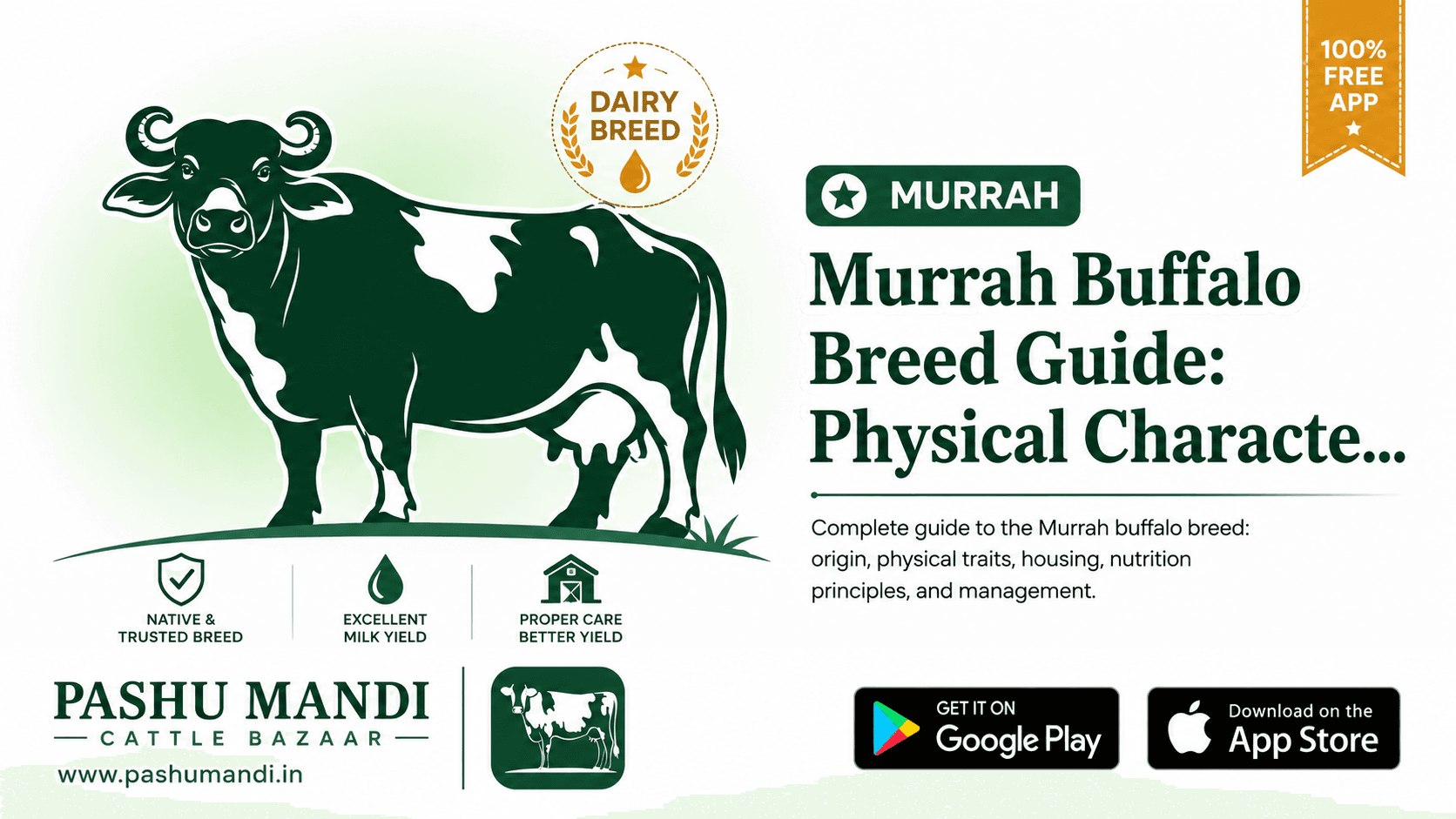
- Horns: Short, tightly curled in a spiral fashion (often described locally as 'Kundal' or 'Jalebi' horns), turning backwards and upwards before curling inward.
- Coat Color: Typically jet black. While small white markings on the switch of the tail or forehead are occasionally observed in field populations, true breed standards favor solid black pigmentation.
- Head and Neck: The head is relatively small, clean-cut, with a broad forehead. Females have a fine, slender neck, while bulls feature a massive, muscular crest.
- Body Conformation: Wedge-shaped body with a deep chest, well-sprung ribs, wide pelvic structure, and clean limbs.
- Udder Structure: Capacious, well-developed udder extending well forward and backward, with distinct milk veins and four uniformly shaped, squarely placed teats.
Housing and Environmental Management
Buffaloes have fewer sweat glands compared to Zebu cattle, making them particularly sensitive to direct heat and high ambient temperatures. Optimal herd management requires:
- Heat Stress Mitigation: Providing shady shelter, ceiling ventilation, and access to fresh wallowing ponds or overhead water sprinklers/foggers during hot summer months.
- Floor Design: Grooved concrete or rubber-matted flooring to prevent slipping, foot rot, and hoof injuries.
- Hygiene and Drainage: Clean, dry bedding with 2% slope for rapid urine and water drainage to reduce mastitis risks.
Nutritional Care Principles
Feeding management must balance roughage and concentrate feeds based on body weight, stage of lactation, and maintenance needs. A standard dairy regimen includes:
- Green Fodder: Leguminous (such as berseem, lucerne, or cowpea) and non-leguminous green fodder (such as maize, sorghum, or hybrid Napier) to support rumen health.
- Dry Roughage: High-quality wheat straw (turi/bhusa) or paddy straw to maintain effective rumen fiber.
- Concentrate Ration: Formulated feed containing cereal grains, protein meals (mustard cake, cotton seed cake, or soybean meal), wheat bran, salt, and area-specific mineral mixtures.
- Fresh Water: Clean, fresh drinking water must be available ad libitum, as water intake directly influences milk volume and metabolic regulation.
हिन्दी सारांश: मुर्रा भैंस - नस्ल की पहचान, उत्पत्ति और डेयरी प्रबंधन
मुर्रा भैंस भारत की सबसे प्रमुख दुधारू भैंस नस्लों में से एक है। इसकी मुख्य पहचान और प्रबंधन के प्रमुख बिंदु निम्नलिखित हैं:
- उत्पत्ति क्षेत्र: हरियाणा के रोहतक, जींद, हिसार जिले और पंजाब के आसपास के मैदानी क्षेत्र।
- शारीरिक लक्षण: गहरा काला रंग, जलेबीनुमा मुड़े हुए छोटे सींग, सुगठित शरीर और चौड़ा विकसित अयन (लेवटी)।
- आवास और देखभाल: भैंसों में पसीने की ग्रंथियां कम होने के कारण गर्मियों में नहलाना, पंखे या फव्वारे की व्यवस्था और साफ हवादार शेड बेहद जरूरी है।
- संतुलित आहार: पर्याप्त हरा चारा, सूखा चारा (भूसा), संतुलित पशु आहार (खल, चोकर, अनाज) और नियमित मिनरल मिक्सचर देना अनिवार्य है।
ਪੰਜਾਬੀ ਸੰਖੇਪ: ਮੁਰ੍ਹਾ ਮੱਝ - ਨਸਲ ਦੀ ਪਛਾਣ ਅਤੇ ਦੇਖਭਾਲ ਗਾਈਡ
ਮੁਰ੍ਹਾ ਮੱਝ ਉੱਤਰੀ ਭਾਰਤ ਦੀ ਇੱਕ ਉੱਤਮ ਦੁਧਾਰੂ ਨਸਲ ਹੈ। ਕਿਸਾਨਾਂ ਅਤੇ ਡੇਅਰੀ ਪਾਲਕਾਂ ਲਈ ਜ਼ਰੂਰੀ ਜਾਣਕਾਰੀ ਹੇਠ ਲਿਖੇ ਅਨੁਸਾਰ ਹੈ:
- ਮੂਲ ਖੇਤਰ: ਹਰਿਆਣਾ (ਰੋਹਤਕ, ਜੀਂਦ, ਹਿਸਾਰ) ਅਤੇ ਪੰਜਾਬ ਦੇ ਮੈਦਾਨੀ ਇਲਾਕੇ।
- ਮੁੱਖ ਲੱਛਣ: ਗੂੜ੍ਹਾ ਕਾਲਾ ਰੰਗ, ਕੁੰਢੇ (ਜਲੇਬੀ ਵਰਗੇ) ਮੁੜੇ ਹੋਏ ਛੋਟੇ ਸਿੰਗ, ਚੌੜਾ ਪਿੰਜਰ ਅਤੇ ਚੰਗੀ ਤਰ੍ਹਾਂ ਵਿਕਸਿਤ ਲੇਵਾ।
- ਸਾਂਭ-ਸੰਭਾਲ: ਗਰਮੀਆਂ ਦੇ ਮੌਸਮ ਵਿੱਚ ਗਰਮੀ ਤੋਂ ਬਚਾਅ ਲਈ ਹਵਾਦਾਰ ਸ਼ੈੱਡ, ਪਾਣੀ ਦੇ ਛਿੜਕਾਅ ਜਾਂ ਨਹਿਰ/ਤਲਾਬ ਵਿੱਚ ਨਹਾਉਣ ਦੀ ਸਹੂਲਤ ਜ਼ਰੂਰੀ ਹੈ।
- ਖੁਰਾਕ ਪ੍ਰਬੰਧਨ: ਹਰਾ ਚਾਰਾ, ਤੂੜੀ, ਸੰਤੁਲਿਤ ਵੰਡ (ਖਲ, ਚੋਕਰ, ਅਨਾਜ) ਅਤੇ ਰੋਜ਼ਾਨਾ ਲੋੜੀਂਦਾ ਧਾਤਾਂ ਦਾ ਚੂਰਾ (ਮਿਨਰਲ ਮਿਕਸਚਰ) ਦੇਣਾ ਚਾਹੀਦਾ ਹੈ।
Important Note
The information in this article is for general educational purposes only. It is not professional veterinary advice, legal advice, or financial advice. Always consult a qualified veterinarian for animal health decisions, a legal professional for legal matters, and a financial advisor for investment decisions. Livestock prices, market conditions, and practices vary by region and change over time — please verify with local sources before making important decisions. This content does not represent the views of any government body and does not guarantee any specific outcome. Found an error? Email us at info@pashumandi.in.
Frequently Asked Questions
Related Articles
Banni Buffalo Breed Guide: Kutch Origin, Physical Traits, Nocturnal Grazing & Dairy Care
Comprehensive guide to the Banni buffalo breed of Kutch: physical characteristics, nocturnal grazing habits, milk traits, climate resilience, and management.
Pre-Purchase Veterinary Health Examination Guide for Dairy Cattle and Buffaloes
Step-by-step veterinary health checklist for buying dairy cows and buffaloes: vital signs, udder health, respiratory screening, and reproductive checks.
Dairy Cattle Buying Guide: Step-by-Step Physical Inspection Checklist
Essential physical inspection checklist and safety guide for farmers buying dairy cows and buffaloes in local mandis or online marketplaces.
Ready to Buy or Sell Cattle?
Download Pashu Mandi — India's trusted cattle marketplace. Browse thousands of listings, connect with sellers directly, and find your perfect animal.