Hariana Cattle Breed Guide: Physical Traits, Dual-Purpose Utility, and Care
Introduction to Hariana Cattle
Hariana cattle represent one of India's most prominent and celebrated indigenous dual-purpose breeds. Originating from the northern agrarian plains, Hariana animals have supported rural livelihoods for centuries by providing strong, energetic draft bullocks for farm operations and transport alongside consistent, nutritious milk from cows.
Their natural hardiness, outstanding tolerance to extreme summer temperatures, and ability to convert dry crop residues into energy make them a dependable choice for farmers and dairy managers across northern and central India.
Native Breeding Tract and Geographical Distribution
The primary breeding tract of Hariana cattle encompasses the state of Haryana, specifically the districts of:
- Core Tract: Rohtak, Jind, Hisar, Bhiwani, Jhajjar, and Gurugram (formerly Gurgaon).
- Adjoining Distribution: Western districts of Uttar Pradesh (Meerut, Aligarh, Bulandshahr), parts of Punjab, and northern borders of Rajasthan (Bharatpur, Alwar).
Over generations, selective breeding by pastoralists and farming communities in this agro-ecological zone established a uniform, vigorous breed well adapted to semi-arid climates, hot summers, and winter chills.
Distinctive Physical Characteristics
Recognizing purebred Hariana cattle requires attention to specific conformation traits established by breed registries and animal husbandry standards:
- Coat Colour: Predominantly white or light grey. In mature bulls, the neck, shoulders, and quarters often develop a darker iron-grey or charcoal shade.
- Head and Face: Long, narrow, and coffin-shaped. The forehead is flat, with a distinctive bony prominence at the top of the poll. The muzzle is broad and typically black.
- Horns: Short to medium in length (typically 10 to 15 cm), emerging outwards and curving slightly upwards and inwards.
- Ears: Moderately small, alert, and horizontal, without pendulous drooping.
- Body Build: Compact, well-knit frame with straight backline. The hump is well-developed in bulls and moderate in cows. Dewlap is small and thin, and the navel flap is tight and trim.
- Limbs and Hooves: Long, clean, and slender legs with exceptional bone density. Hooves are small, compact, hard, and black, providing sure-footed agility on hard terrain.
- Tail: Thin and tapering, ending in a black switch that reaches just above or at the hock joint.
Dual-Purpose Performance and Utility
The dual-purpose nature of Hariana cattle provides balanced economic utility on diversified farms:
- Milking Characteristics: Hariana cows produce milk rich in fat and solids-not-fat (SNF). Milk yield varies widely based on genetic lineage, age, lactation stage, and nutritional management. Cows demonstrate steady lactation persistency under balanced feeding.
- Draft Power: Hariana bullocks are regarded as among the quickest and most willing working draft animals in India. They excel at road transport, ploughing, and heavy field preparation under high ambient heat.
- Docility and Temperament: Generally alert, responsive, and gentle when handled calmly and consistently from calfhood.
Housing, Feeding, and Management Guidelines
To optimize the health and productivity of Hariana cattle, adopt structured herd management practices:
- Nutritional Balance: Provide a balanced ration consisting of quality green fodder (sorghum, maize, berseem), clean cereal straw or stover, and balanced concentrate feed supplemented with mineral mixtures and salt.
- Clean Water: Ensure ad-libitum access to cool, fresh, contaminant-free drinking water, particularly during extreme summer months.
- Shelter and Ventilation: House animals in well-ventilated, clean, and dry sheds with non-slippery flooring. Provide adequate shade and air circulation to mitigate heat stress.
- Routine Health Care: Follow regular deworming schedules and timely vaccination against endemic infectious conditions under the guidance of a registered veterinary practitioner.
Buying and Selection Considerations for Farmers
When selecting Hariana cattle from livestock mandis or regional breeders, keep the following evaluation points in mind:
- Verify breed purity through facial structure, tight dewlap, compact naval flap, and horn curvature.
- Inspect udder texture, teat placement, and walking gait before finalizing any transaction.
- Assess overall vitality, bright eyes, alert posture, and clean skin coat.
- Review complete calving history, breeding records, and health documentation whenever available.
Important Note
The information in this article is for general educational purposes only. It is not professional veterinary advice, legal advice, or financial advice. Always consult a qualified veterinarian for animal health decisions, a legal professional for legal matters, and a financial advisor for investment decisions. Livestock prices, market conditions, and practices vary by region and change over time — please verify with local sources before making important decisions. This content does not represent the views of any government body and does not guarantee any specific outcome. Found an error? Email us at info@pashumandi.in.
Frequently Asked Questions
Related Articles
Rathi Cattle Breed Guide: Physical Traits, Arid Resilience, Origin & Dairy Management
Complete Rathi cattle breed guide covering physical characteristics, origin in Rajasthan's arid zone, heat tolerance, feeding & dairy herd management.
Sahiwal Cattle Breed Profile: Traits, Climate Resilience, and Dairy Care
Comprehensive guide to the indigenous Sahiwal cow: origin, heat tolerance, physical characteristics, and sustainable herd management practices.
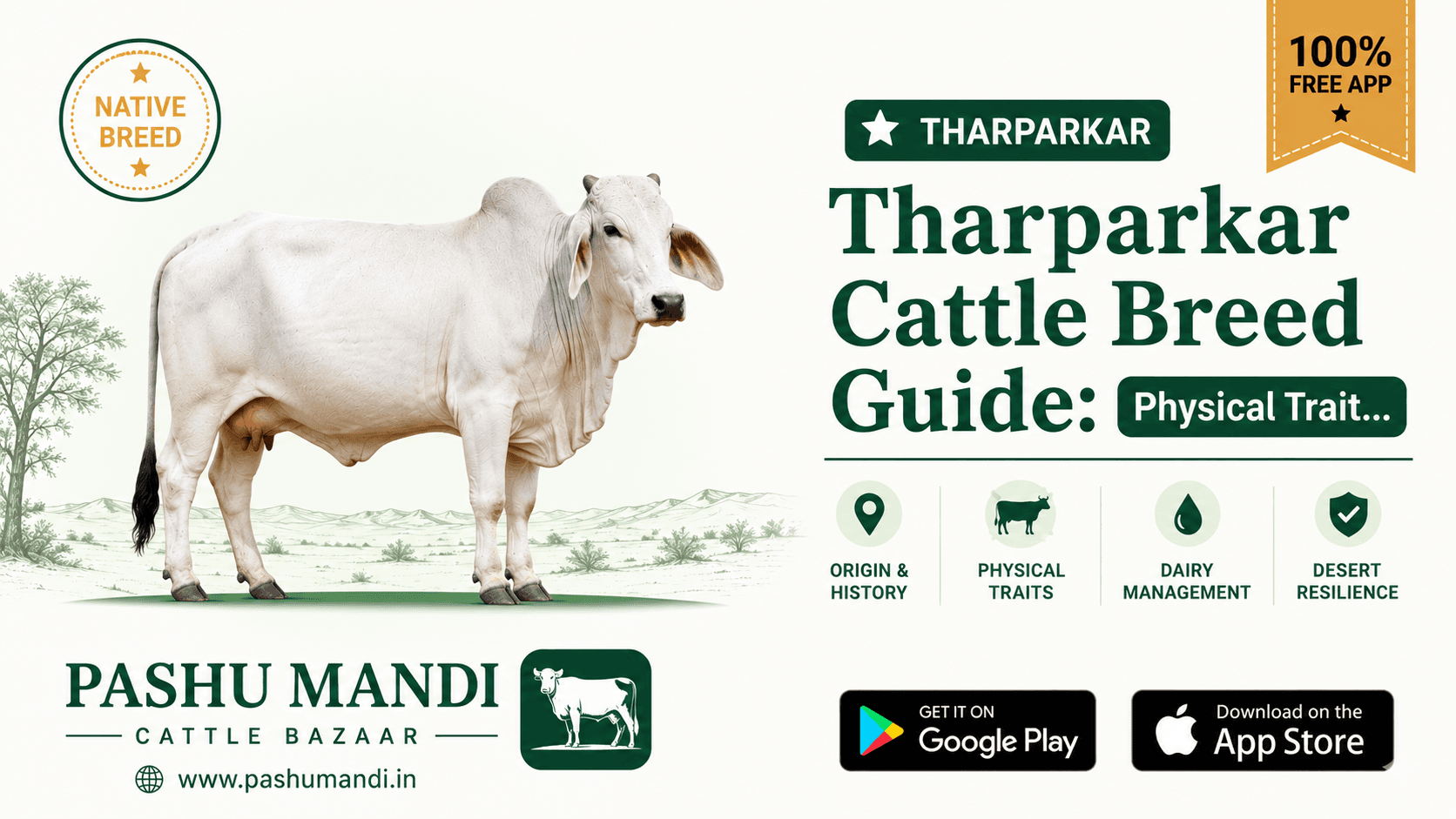
Tharparkar Cattle Breed Guide: Physical Traits, Desert Resilience, Origin & Dairy Management
Complete guide to the Tharparkar cattle breed: historical origin, physical characteristics, heat and drought resilience, dual-purpose dairy traits, and scientific management.
Ready to Buy or Sell Cattle?
Download Pashu Mandi — India's trusted cattle marketplace. Browse thousands of listings, connect with sellers directly, and find your perfect animal.