Red Sindhi Cattle Breed Guide: Physical Traits, Origin, Heat Resilience & Dairy Management
Introduction to Red Sindhi Cattle
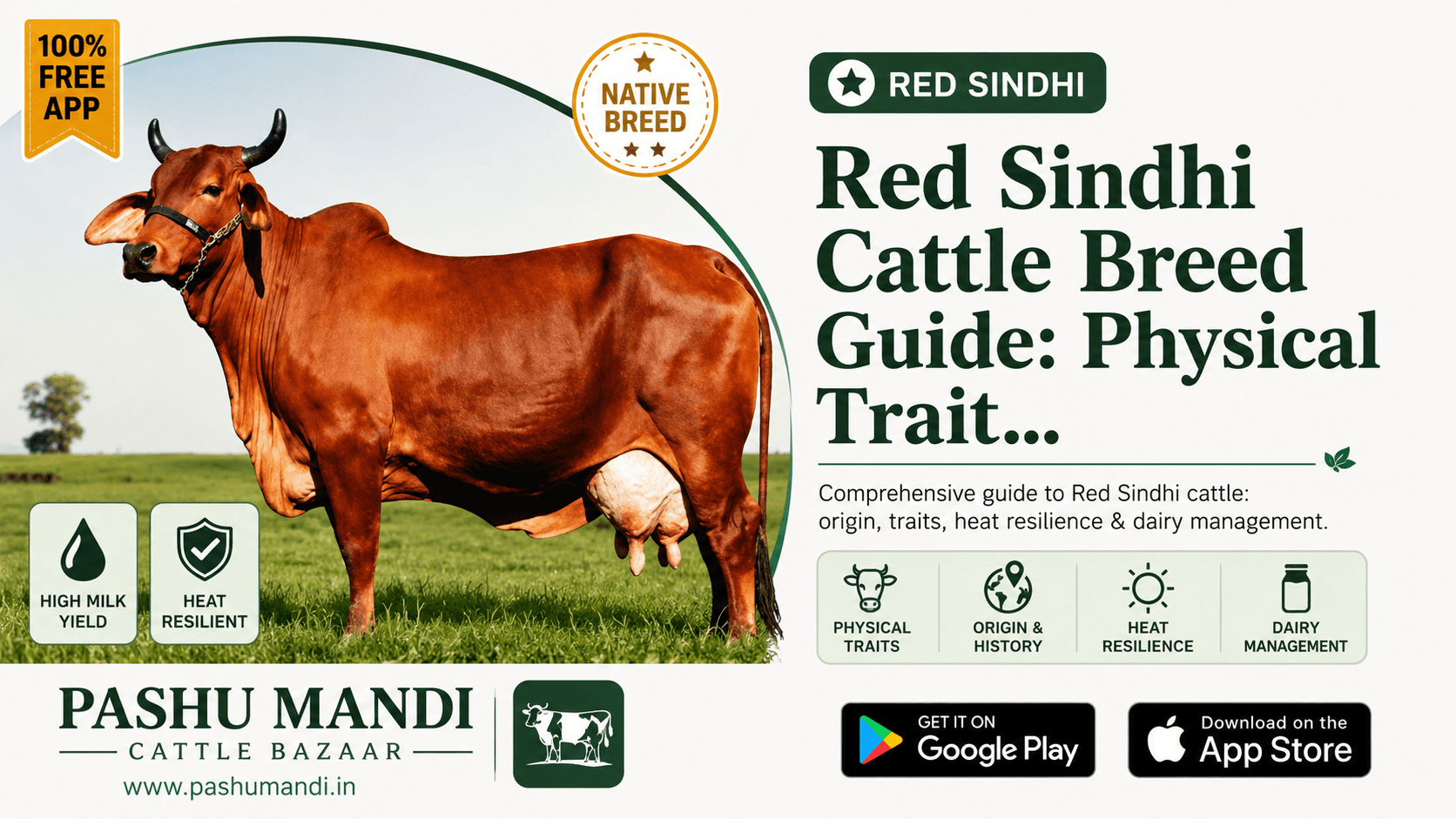
The Red Sindhi (also known historically as Malir, Red Karachi, or Sindhi) is one of the most prominent indigenous zebu (Bos indicus) milch breeds of South Asia. Prized across tropical regions for its distinct deep red coloration, compact symmetry, and outstanding climate adaptability, the Red Sindhi has contributed significantly to tropical dairy development programs worldwide.
For dairy farmers seeking hardy, heat-tolerant cattle that perform reliably under challenging tropical weather, understanding the physical conformation, nutritional requirements, and management practices of the Red Sindhi breed is essential. On platforms like Pashu Mandi, verified breed knowledge empowers buyers and sellers to make informed decisions without relying on exaggerated claims.
Origin and Breeding Tract
The geographical roots of the Red Sindhi breed trace back to the arid hilly tracts of the Sindh region, specifically around Karachi and Hyderabad districts, extending into neighboring grazing pastures. Over decades, recognized breeding herds were established across Indian government livestock research farms, agricultural institutes, and specialized dairy operations in states such as Assam, Odisha, Tamil Nadu, Kerala, and Karnataka.
Due to its high adaptability, the breed has been utilized globally in crossbreeding programs throughout Southeast Asia, Australia, East Africa, and Latin America to infuse heat tolerance and disease resistance into dairy herds.
Physical Characteristics and Conformation
Recognizing authentic Red Sindhi conformation requires inspecting specific morphological features:
- Coat Color: Deep red to reddish-brown shades dominate. Bulls often display darker red or almost black shading across the hump, neck, and shoulders, whereas cows maintain a more uniform reddish coat.
- Head & Face: Medium-sized, well-proportioned head with a slightly bulging forehead between the eyes. The facial profile is clean and alert.
- Horns: Short, thick horns curving outward and upward, often blunt at the tips. Some animals are naturally polled or dehorned in commercial setups.
- Ears: Moderate in length, slightly drooping, but alert compared to the long, pendulous ears of the Gir breed.
- Body Build: Compact, symmetrical, and deep-bodied with fine bones, medium dewlap with moderate folds, and a well-developed thoracic hump in males.
- Legs & Hooves: Strong, short legs with hard, dark, tightly set hooves that resist foot rot in wet seasons.
- Udder & Teats: Capacious, well-attached udder with evenly spaced, cylindrical teats suitable for both manual hand milking and machine milking.
Key Breed Traits Comparison
| Characteristic | Red Sindhi Trait | Farmer Significance |
|---|---|---|
| Coat Color | Deep red to reddish-brown | Reflects high solar radiation in open grazing |
| Body Size | Medium, compact frame | Lower maintenance feed requirement than large exotics |
| Climate Resilience | High thermo-tolerance & tick resistance | Maintains health in hot, humid, and tropical conditions |
| Temperament | Docile and manageable | Easy handling during milking and veterinary care |
| Dual Utility | Dairy milch cow & hardy bullock draft | Versatile utility for integrated farm operations |
Adaptability and Heat Tolerance
Red Sindhi cattle exhibit biological adaptations that make them resilient in tropical environments:
- Efficient Thermoregulation: High density of sweat glands and vascular skin surface area allow rapid dissipation of body heat during peak summer temperatures.
- Pigmentation: Dark skin pigmentation beneath the red hair coat protects against solar radiation and skin dermatitis.
- Ectoparasite Resistance: Thick, mobile skin with smooth hair structure provides natural defense against ticks and external parasites, reducing vector-borne infections.
- Fodder Utilization: Efficient roughage conversion enables Red Sindhi cattle to maintain condition on coarse tropical grasses and agricultural by-products during lean seasons.
Dairy Management and Nutrition Guidelines
Optimizing the productivity of Red Sindhi cattle requires balanced nutritional planning and clean housing:
1. Balanced Feeding Schedule
Like all indigenous dairy cattle, Red Sindhi nutritional intake should be divided into dry matter (DM), energy, digestible crude protein (DCP), minerals, and abundant clean drinking water. For detailed ration planning, consult our balanced dairy feeding guide.
- Green Fodder: Provide leguminous (berseem, lucerne, cowpea) and non-leguminous (maize, sorghum, hybrid napier) grasses daily.
- Dry Fodder: Clean wheat straw, paddy straw, or sorghum stover to provide essential rumen fiber.
- Concentrate Mixture: Balanced feed mix containing crushed grains (maize/barley), oil cakes (mustard/cottonseed), wheat bran, and 2% area-specific mineral mixture with 1% salt.
- Clean Water: Free-choice access to fresh, cool water at all times (lactating cows require 60 to 90 liters daily).
2. Housing and Sanitation
Provide ventilated shed housing with at least 3.5 to 4.0 square meters of covered floor space per adult cow, plus open paddock roaming space. Grooved concrete flooring with a 1:50 drainage slope prevents slipping and hoof injuries. Daily dung removal, dry bedding, and periodic lime dusting maintain udder hygiene and prevent environmental mastitis.
Important Buying and Selection Advice
When purchasing Red Sindhi cattle in physical bazaars or through digital marketplaces:
- Verify True Breed Conformation: Inspect the compact frame, reddish coat, horn alignment, and head shape. Beware of non-descript cattle falsely labeled as pure Red Sindhi.
- Examine Dentition and Age: Check the animal's teeth to accurately estimate age and lactation stage before negotiating. Refer to our cattle age determination guide.
- Lactation Testing: Conduct at least two consecutive supervised milkings (morning and evening) to evaluate actual milk output, teat ease, and udder let-down.
- Veterinary Examination: Always involve a licensed veterinarian to evaluate reproductive health, palpate for pregnancy status, and check vaccination history (FMD, HS, BQ, Brucellosis).
हिन्दी सारांश (Hindi Summary): लाल सिंधी गाय नस्ल परिचय एवं प्रबंधन
लाल सिंधी (Red Sindhi) भारत और दक्षिण एशिया की अत्यंत प्रतिष्ठित देशी (ज़ेबू) दुधारू गोवंश नस्ल है। इसका गहरा लाल रंग, मध्यम और गठीला शरीर, तथा गर्मी सहन करने की असाधारण क्षमता इसे उष्णकटिबंधीय जलवायु के लिए सर्वोत्तम बनाती है।
प्रमुख पहचान एवं शारीरिक लक्षण:
- रंग: गहरा लाल से भूरा-लाल। नर पशुओं में कूबड़ और कंधों का रंग अपेक्षाकृत अधिक गहरा होता है।
- सिर एवं सींग: मध्यम सिर, थोड़ा उभरा हुआ माथा, तथा छोटे व मोटे सींग जो ऊपर की ओर घुमावदार होते हैं।
- गर्मी व रोग प्रतिरोधक क्षमता: त्वचा में पसीने की ग्रंथियों की अधिकता तथा पराबैंगनी किरणों से बचाव के कारण यह नस्ल भीषण गर्मी में भी तनावमुक्त रहती है और चिचड़ियों (ticks) से सुरक्षित रहती है।
- प्रबंधन एवं आहार: संतुलित हरा चारा (नेपियर, बरसीम, ज्वार), सूखा भूसा, तथा खनिज मिश्रण युक्त दाना मिश्रण देकर इस नस्ल से स्थिर दुग्ध उत्पादन प्राप्त किया जा सकता है।
पशुपालक भाइयों को सलाह दी जाती है कि गाय खरीदते समय शारीरिक बनावट की जांच करें, दांत देखकर आयु का सही आंकलन करें, और योग्य पशु चिकित्सक से स्वास्थ्य परीक्षण अवश्य करवाएं।
ਪੰਜਾਬੀ ਸੰਖੇਪ (Punjabi Summary): ਰੈੱਡ ਸਿੰਧੀ ਗਾਂ ਨਸਲ ਦੀ ਪਛਾਣ ਅਤੇ ਦੇਖਭਾਲ
ਰੈੱਡ ਸਿੰਧੀ (Red Sindhi) ਦੇਸੀ ਦੁਧਾਰੂ ਪਸ਼ੂਆਂ ਦੀ ਇੱਕ ਬਹੁਤ ਹੀ ਮਜ਼ਬੂਤ ਅਤੇ ਵਧੀਆ ਨਸਲ ਹੈ। ਇਸ ਦਾ ਗੂੜ੍ਹਾ ਲਾਲ ਰੰਗ, ਦਰਮਿਆਨਾ ਸੰਤੁਲਿਤ ਸਰੀਰ ਅਤੇ ਗਰਮੀ ਬਰਦਾਸ਼ਤ ਕਰਨ ਦੀ ਕੁਦਰਤੀ ਸਮਰੱਥਾ ਇਸ ਨੂੰ ਡੇਅਰੀ ਫਾਰਮਿੰਗ ਲਈ ਬਹੁਤ ਢੁਕਵਾਂ ਬਣਾਉਂਦੀ ਹੈ।
ਮੁੱਖ ਵਿਸ਼ੇਸ਼ਤਾਵਾਂ ਅਤੇ ਪਛਾਣ:
- ਸਰੀਰਕ ਦਿੱਖ: ਗੂੜ੍ਹਾ ਲਾਲ ਜਾਂ ਲਾਲ-ਭੂਰਾ ਰੰਗ, ਚੌੜਾ ਮੱਥਾ, ਦਰਮਿਆਨੇ ਕੰਨ ਅਤੇ ਮਜ਼ਬੂਤ ਖੁਰ ਜੋ ਗਿੱਲੇ ਮੌਸਮ ਵਿੱਚ ਵੀ ਖਰਾਬ ਨਹੀਂ ਹੁੰਦੇ।
- ਮੌਸਮੀ ਅਨੁਕੂਲਤਾ: ਗਰਮ ਮੌਸਮ ਅਤੇ ਚਿੱਚੜਾਂ/ਬਿਮਾਰੀਆਂ ਪ੍ਰਤੀ ਉੱਚ ਕੁਦਰਤੀ ਪ੍ਰਤੀਰੋਧਕ ਸਮਰੱਥਾ।
- ਖੁਰਾਕ ਅਤੇ ਸਾਂਭ-ਸੰਭਾਲ: ਸਾਫ਼ ਹਵਾਦਾਰ ਸ਼ੈੱਡ, ਰੋਜ਼ਾਨਾ ਹਰਾ ਅਤੇ ਸੁੱਕਾ ਚਾਰਾ, ਅਤੇ ਸੰਤੁਲਿਤ ਵੰਡ (ਦਾਣਾ ਅਤੇ ਧਾਤਾਂ ਦਾ ਚੂਰਾ) ਪਸ਼ੂ ਦੀ ਸਿਹਤ ਅਤੇ ਦੁੱਧ ਉਤਪਾਦਨ ਨੂੰ ਵਧੀਆ ਰੱਖਦੇ ਹਨ।
ਕੋਈ ਵੀ ਪਸ਼ੂ ਖਰੀਦਣ ਵੇਲੇ ਲਗਾਤਾਰ ਦੋ ਵਾਰ ਚੁਆਈ ਕਰਕੇ ਦੁੱਧ ਦੀ ਪਰਖ ਕਰੋ ਅਤੇ ਪਸ਼ੂ ਡਾਕਟਰ ਤੋਂ ਗਰਭ ਅਤੇ ਸਿਹਤ ਦੀ ਜਾਂਚ ਜ਼ਰੂਰ ਕਰਵਾਓ।
Important Note
The information in this article is for general educational purposes only. It is not professional veterinary advice, legal advice, or financial advice. Always consult a qualified veterinarian for animal health decisions, a legal professional for legal matters, and a financial advisor for investment decisions. Livestock prices, market conditions, and practices vary by region and change over time — please verify with local sources before making important decisions. This content does not represent the views of any government body and does not guarantee any specific outcome. Found an error? Email us at info@pashumandi.in.
Frequently Asked Questions
Related Articles
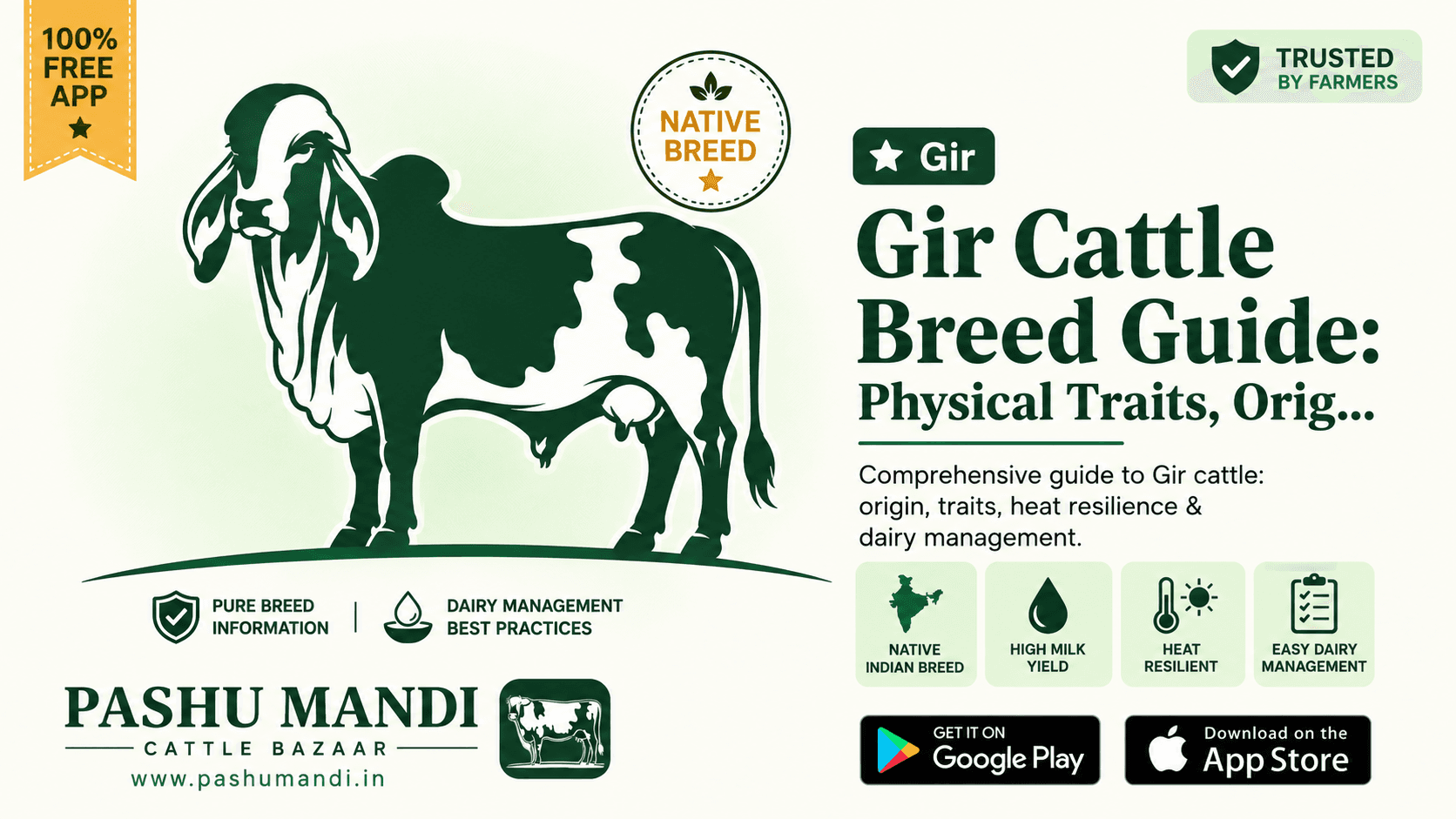
Gir Cattle Breed Guide: Physical Traits, Origin, Heat Resilience & Dairy Management
Comprehensive guide to Gir cattle: historical origin in Saurashtra, distinguishing physical characteristics, heat tolerance, housing, and dairy management practices.
Hariana Cattle Breed Guide: Physical Traits, Dual-Purpose Utility, and Care
Comprehensive guide to Hariana cattle: native home tract, distinctive physical traits, dual-purpose draft and dairy utility, feeding, and management.
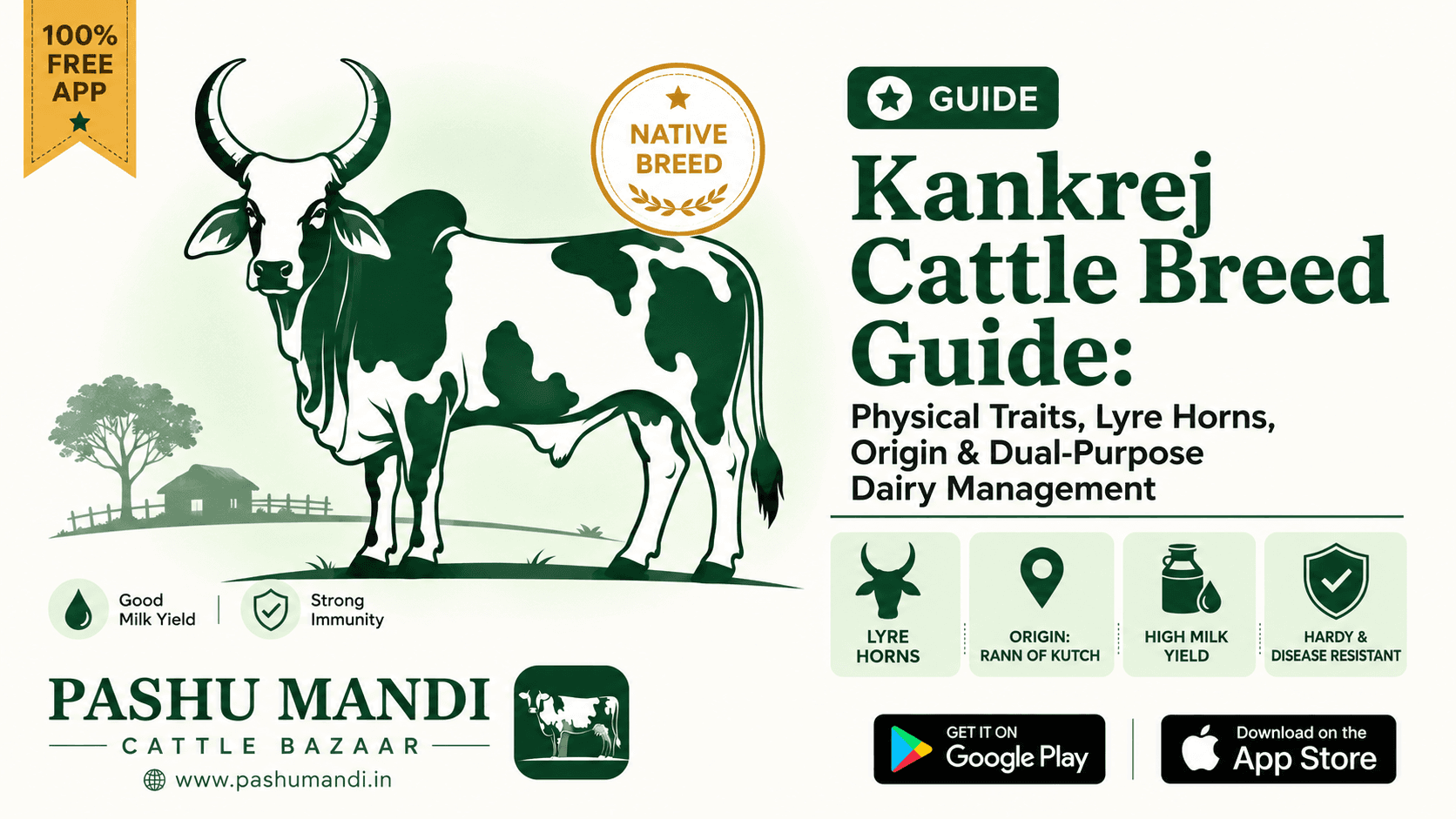
Kankrej Cattle Breed Guide: Physical Traits, Lyre Horns, Origin & Dual-Purpose Dairy Management
Complete guide to Kankrej cattle (Wadad/Wadhir): origin in Rann of Kutch, lyre-shaped horns, distinctive Savai chal gait, climate resilience, milk potential, and farm management.
Ready to Buy or Sell Cattle?
Download Pashu Mandi — India's trusted cattle marketplace. Browse thousands of listings, connect with sellers directly, and find your perfect animal.