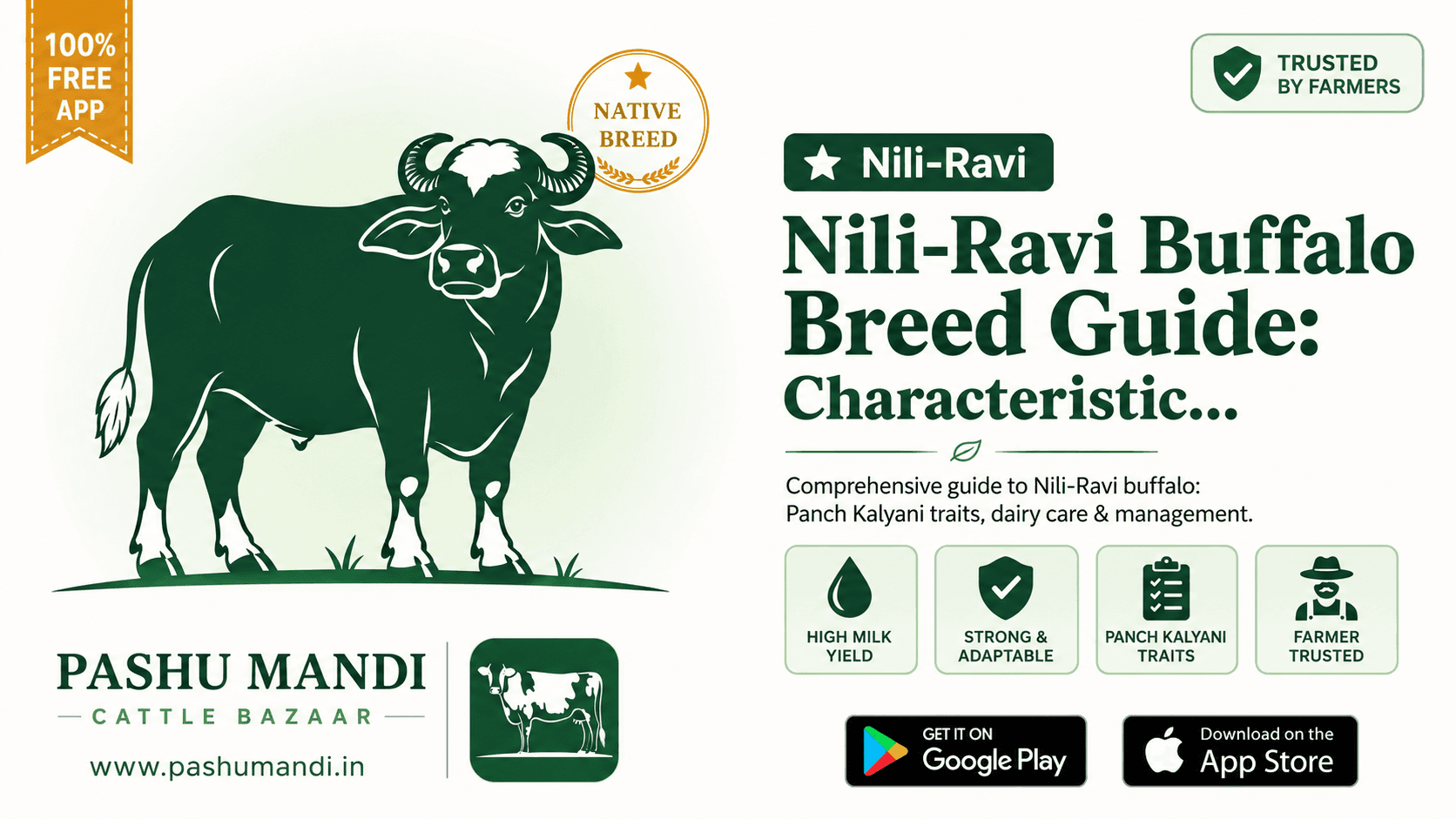
Nili-Ravi Buffalo Breed Guide: Characteristics, Panch Kalyani Traits & Dairy Care
Introduction to the Nili-Ravi Buffalo Breed
The Nili-Ravi buffalo is one of the foremost indigenous dairy buffalo breeds of the Indian subcontinent, revered alongside the famous Murrah buffalo for its exceptional dairy capacity and high butterfat yield. Originating in the lush agro-ecological belt between the Sutlej and Ravi rivers of Punjab, this breed represents a cornerstone of commercial dairy farming in north-western India.
Historically, 'Nili' (named after the blue waters of the Sutlej river) and 'Ravi' (from the Ravi river valley) existed as two distinct strains before being unified as the Nili-Ravi breed. Recognized by the Indian Council of Agricultural Research (ICAR) and the National Bureau of Animal Genetic Resources (NBAGR), the Nili-Ravi is celebrated for its distinctive physical markings and superior dairy temperament.
Distinctive Physical Features and the 'Panch Kalyani' Markings
The hallmark of a purebred or high-grade Nili-Ravi buffalo is its unique set of white markings, traditionally termed Panch Kalyani (five auspicious white markings):
- Forehead Blaze / Star: A prominent white patch or star situated squarely on the forehead and face.
- White Muzzle: Distinctive white or pinkish-white pigmentation on the muzzle and nostrils.
- Four White Socks: White markings extending from the hooves up to the fetlock/knee joints on all four limbs.
- White Switch of Tail: A dense, pure white tuft (switch) at the lower tip of the tail extending below the hocks.
- Wall Eyes (Cat Eyes): Clear, distinct eyes with a whitish or pale-blue iris ring (often referred to as glass or wall eyes), giving the animal an alert and distinct appearance.
Structurally, Nili-Ravi buffaloes possess a deep, low-set, capacious barrel, an elongated head with a slight depression between the eyes, and short, tightly curled horns that are slightly less coiled than those of the Murrah breed.
Breed Profile & Morphological Summary
| Morphological Trait | Standard Characteristics | Field Observations |
|---|---|---|
| Native Breeding Tract | Sutlej & Ravi river basins (Ferozepur, Fazilka, Amritsar, Gurdaspur, Tarn Taran) | Thrives in canal-irrigated agricultural regions with abundant green fodder. |
| Coat Color | Predominantly black or deep brown with white 'Panch Kalyani' extremities | Smooth, pliable skin with sparse hair in mature animals. |
| Horns | Short, tightly curved circular cross-section horns | Curve inward and slightly upward, less tightly coiled than classic Murrah spirals. |
| Udder & Teats | Capacious, well-developed, squarely placed cylindrical teats | Prominent milk veins with smooth teat sphincter facilitating effortless hand and machine milking. |
| Average Milk Fat % | Typically 6.8% to 7.2% | Ideal for premium whole milk, ghee, and traditional dairy sweets. |
Feeding and Nutritional Management for High Milk Production
Maximizing the genetic potential of a Nili-Ravi buffalo requires a scientifically formulated, balanced feeding regimen:
- High-Quality Green Fodder: Buffaloes have a highly efficient ruminal digestive system capable of processing coarse roughages. Provide 30–40 kg of seasonal green fodder daily (berseem, lucerne, maize, sorghum, or oats). Read our Dairy Cattle & Buffalo Balanced Feeding Guide for detailed ration formulations.
- Concentrate Rations: Feed a balanced concentrate mix (containing 18–20% crude protein and 70% TDN) based on milk output—typically 1 kg concentrate for body maintenance plus 1 kg for every 2–2.5 kg of milk produced.
- Chelated Mineral Mixtures & Salt: Incorporate 50–70 grams of high-quality mineral mixture and 30–40 grams of common salt daily to maintain reproductive health, prevent silent heat, and sustain milk fat synthesis.
- Clean Drinking Water: Lactating buffaloes consume between 80 and 120 liters of fresh water daily. Ensure continuous ad-libitum access to clean water troughs.
Thermal Comfort and Housing Guidelines
Buffaloes are particularly vulnerable to thermal heat stress during peak summer months due to their dark skin and low density of sweat glands. Implementing proper shed cooling ensures uninterrupted milk yields:
- Cooling & Wallowing: Provide access to a clean wallowing pond for 1–2 hours during mid-day, or install ceiling fans combined with low-pressure water foggers/sprinklers in the dairy barn.
- Ventilated Shed Design: Construct sheds with high roofs (at least 10–12 feet at eaves), open-side walls for natural cross-ventilation, and reflective or thatched roofing materials.
- Routine Prophylaxis: Maintain strict vaccination protocols against Haemorrhagic Septicaemia (HS) and Black Quarter (BQ) prior to monsoons, alongside scheduled deworming every 3–4 months.
हिन्दी सारांश (Hindi Summary)
नीली-रावी भैंस की पहचान, विशेषताएं और डेयरी प्रबंधन
नीली-रावी भारतीय उपमहाद्वीप की एक प्रमुख दुधारू भैंस की नस्ल है, जिसकी उत्पत्ति पंजाब की सतलुज और रावी नदी घाटियों (फिरोजपुर, फाजिल्का, अमृतसर, गुरदासपुर) में हुई। इस नस्ल की सबसे बड़ी पहचान इसके पंच कल्याणी लक्षण हैं: माथे पर सफेद टीका, सफेद थूथन, चारों पैरों पर सफेद मोजे (निशान), पूंछ की सफेद गुच्छी (स्विच) और बिल्ली जैसी कजरारी/सफेद आंखें (Wall eyes)।
नीली-रावी के दूध में औसतन 6.8% से 7.2% तक वसा (Fat) पाई जाती है, जो खोया और घी उत्पादन के लिए अत्यंत उपयुक्त है। बेहतर दुग्ध उत्पादन के लिए संतुलित हरा चारा, प्रोटीन युक्त दाना मिश्रण, खनिज लवण और गर्मियों में पानी के छिड़काव अथवा नहलाने (wallowing) की उचित व्यवस्था आवश्यक है। प्रमाणित नीली-रावी और मुर्रा भैंसों की खरीद-फरोख्त के लिए Pashu Mandi का उपयोग करें।
ਪੰਜਾਬੀ ਸੰਖੇਪ (Punjabi Summary)
ਨੀਲੀ-ਰਾਵੀ ਮੱਝ ਦੀ ਨਸਲ, ਵਿਸ਼ੇਸ਼ਤਾਵਾਂ ਅਤੇ ਡੇਅਰੀ ਸੰਭਾਲ ਗਾਈਡ
ਨੀਲੀ-ਰਾਵੀ ਪੰਜਾਬ ਦੀ ਸ਼ਾਨ ਅਤੇ ਪ੍ਰਮੁੱਖ ਦੁਧਾਰੂ ਮੱਝ ਦੀ ਨਸਲ ਹੈ, ਜਿਸਦਾ ਮੂਲ ਖੇਤਰ ਸਤਲੁਜ ਅਤੇ ਰਾਵੀ ਦਰਿਆਵਾਂ ਦਾ ਇਲਾਕਾ (ਫ਼ਿਰੋਜ਼ਪੁਰ, ਫ਼ਾਜ਼ਿਲਕਾ, ਅੰਮ੍ਰਿਤਸਰ, ਤਰਨ ਤਾਰਨ ਅਤੇ ਗੁਰਦਾਸਪੁਰ) ਹੈ। ਇਸ ਨਸਲ ਦੀ ਮੁੱਖ ਪਛਾਣ ਪੰਜ ਕਲਿਆਣੀ ਨਿਸ਼ਾਨ ਹਨ: ਮੱਥੇ 'ਤੇ ਚਿੱਟਾ ਟਿੱਕਾ, ਚਿੱਟਾ ਥੂਥਣ, ਚਾਰੇ ਲੱਤਾਂ 'ਤੇ ਚਿੱਟੇ ਨਿਸ਼ਾਨ (ਮੋਜ਼ੇ), ਪੂਛ ਦਾ ਚਿੱਟਾ ਲੱਛਾ ਅਤੇ ਚਿੱਟੀ ਘੇਰੇ ਵਾਲੀਆਂ ਅੱਖਾਂ (ਬਿੱਲੀਆਂ ਅੱਖਾਂ)।
ਇਸ ਦੇ ਦੁੱਧ ਵਿੱਚ 6.8% ਤੋਂ 7.2% ਤੱਕ ਫੈਟ ਹੁੰਦੀ ਹੈ। ਗਰਮੀਆਂ ਦੇ ਮੌਸਮ ਵਿੱਚ ਮੱਝਾਂ ਨੂੰ ਧੁੱਪ ਅਤੇ ਗਰਮੀ ਤੋਂ ਬਚਾਉਣ ਲਈ ਪਾਣੀ ਦੇ ਛਿੜਕਾਅ ਜਾਂ ਨਹਿਰ/ਤਲਾਬ ਵਿੱਚ ਨਹਾਉਣ ਦੀ ਸਹੂਲਤ ਜ਼ਰੂਰੀ ਹੈ। ਚੰਗੀ ਖੁਰਾਕ ਵਿੱਚ ਹਰਾ ਚਾਰਾ, ਸੰਤੁਲਿਤ ਵੰਡ ਅਤੇ ਧਾਤਾਂ ਦਾ ਚੂਰਾ (ਮਿਨਰਲ ਮਿਕਸਚਰ) ਸ਼ਾਮਲ ਕਰਨਾ ਚਾਹੀਦਾ ਹੈ। ਨਸਲੀ ਨੀਲੀ-ਰਾਵੀ ਪਸ਼ੂਆਂ ਦੇ ਸਿੱਧੇ ਵਪਾਰ ਲਈ Pashu Mandi ਇੱਕ ਭਰੋਸੇਯੋਗ ਮੰਚ ਹੈ।
Important Note
The information in this article is for general educational purposes only. It is not professional veterinary advice, legal advice, or financial advice. Always consult a qualified veterinarian for animal health decisions, a legal professional for legal matters, and a financial advisor for investment decisions. Livestock prices, market conditions, and practices vary by region and change over time — please verify with local sources before making important decisions. This content does not represent the views of any government body and does not guarantee any specific outcome. Found an error? Email us at info@pashumandi.in.
Frequently Asked Questions
Related Articles
Banni Buffalo Breed Guide: Kutch Origin, Physical Traits, Nocturnal Grazing & Dairy Care
Comprehensive guide to the Banni buffalo breed of Kutch: physical characteristics, nocturnal grazing habits, milk traits, climate resilience, and management.
Jaffarabadi Buffalo Breed Guide: Physical Traits, Origin, Horn Structure & Dairy Management Guide
Comprehensive breed profile of the Jaffarabadi buffalo: native Saurashtra habitat, distinctive drooping horns, high butterfat milk production, and care practices.
Mehsana Buffalo Breed Guide: Physical Traits, Milk Potential, and Management
A detailed guide covering Mehsana buffalo breed characteristics, origin in Gujarat, milk potential, housing, nutrition, and practical management for dairy farmers.
Ready to Buy or Sell Cattle?
Download Pashu Mandi — India's trusted cattle marketplace. Browse thousands of listings, connect with sellers directly, and find your perfect animal.